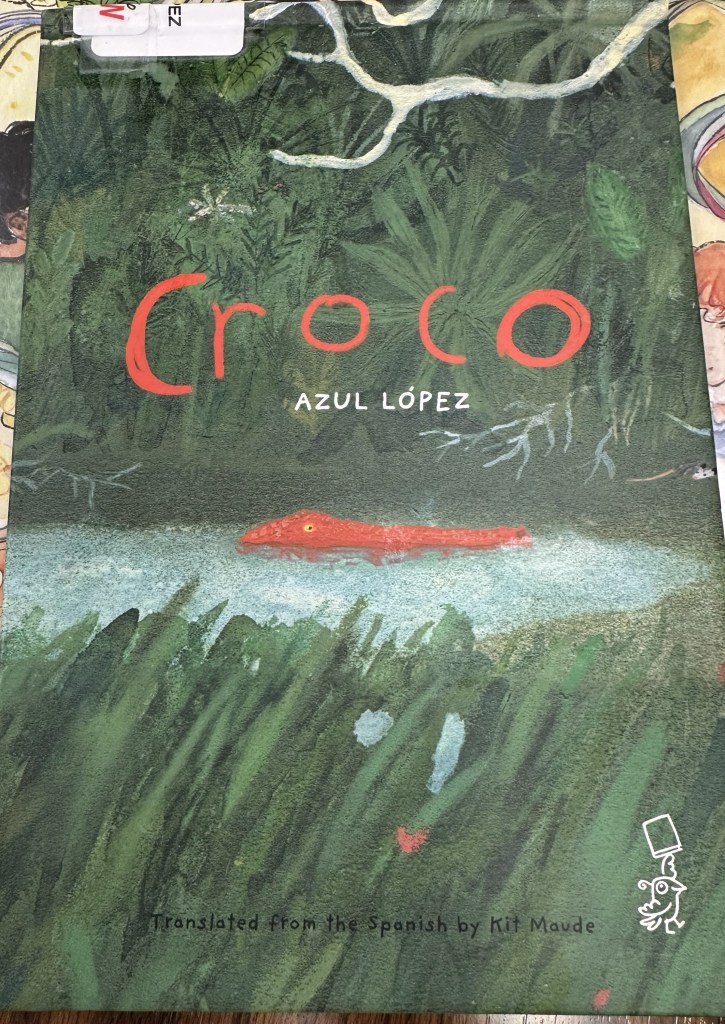
Croco
by Azul López Translated from the Spanish by Kit Maude
Winner of the 2026 Mildred A. Batchelder Award
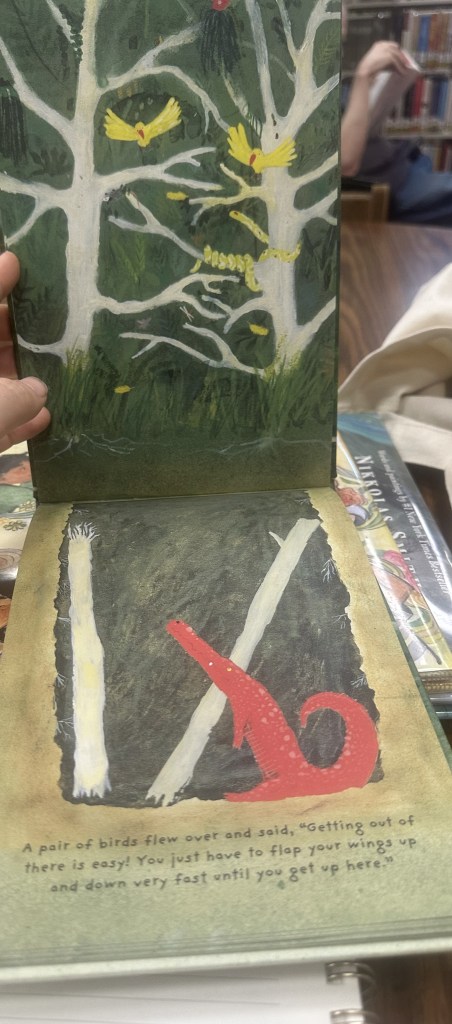
Poor Croco. This crocodile is going about his business when he stumbles into a large hole. Although many jungle animals offer Croco advice, none of it is quite right for him. This simple story is elevated to the next level by the book’s design. It opens vertically, rather than horizontally. This charming change is an integral part of the story.
In her interview with “Let’s Talk Picture Books” author/illustrator López discusses her design choice.
“I wanted the book to behave like a stage. I had read an interview about David Zinn’s set design work and—as inspiration often works—without realizing it, I started playing with cutouts of Croco in different positions. That’s when I understood that what I needed for the story was, as he said in that interview, for the stage to be a character in itself.
The use of color was my way of marking the distance between Croco, the birds, the monkeys, the snake, and, of course, the stage itself. The vertical format came from the need to give the book physical depth. This allowed the fall to feel more dramatic, so that Croco’s sadness would also feel deeper.
In a workshop in Sweden, a child told me that the length of the book and the way it opens and closes reminded him of a crocodile’s mouth. I really liked his discovery.”
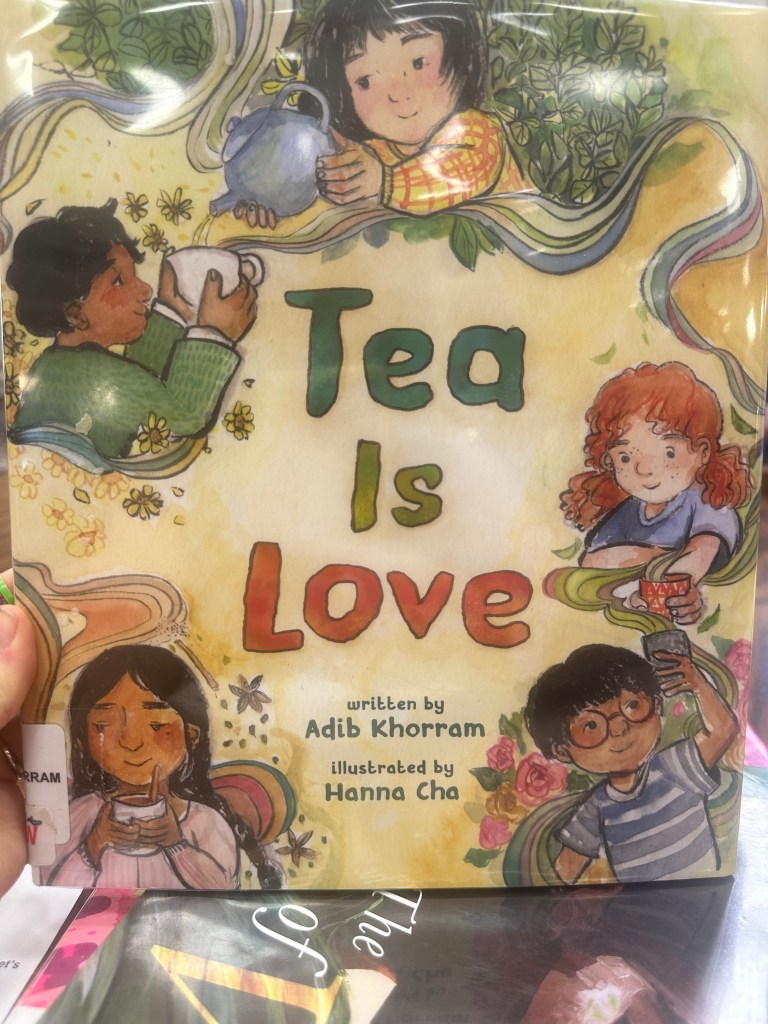
Tea is Love
by Abid Khorram
Illustrated by Hanna Cha
Published 2025
Art: sumi ink, watercolor, gouache, chalk-colored pencils
Khorram and Cha book “Tea is Love” warms as a satisfying comfort read. Khorram’s short, simple sentences and repeating pattern (“Tea is…”) settle readers in for a quiet moment. His author’s note in the back provides some interesting and critical history of the global tea trade.
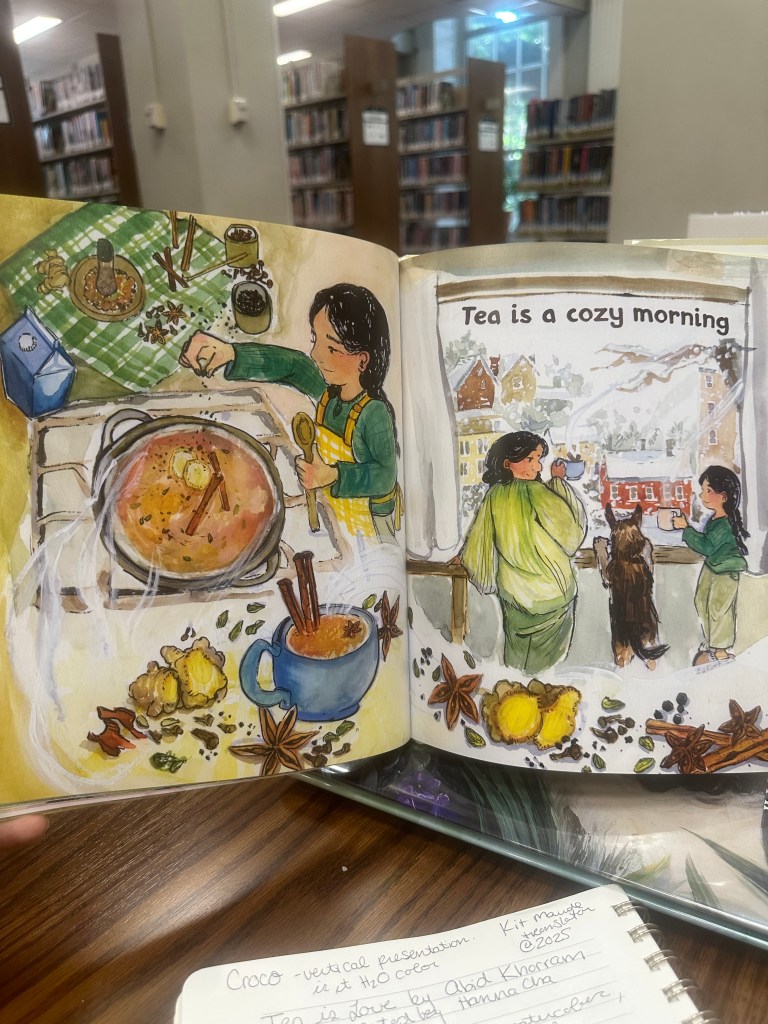
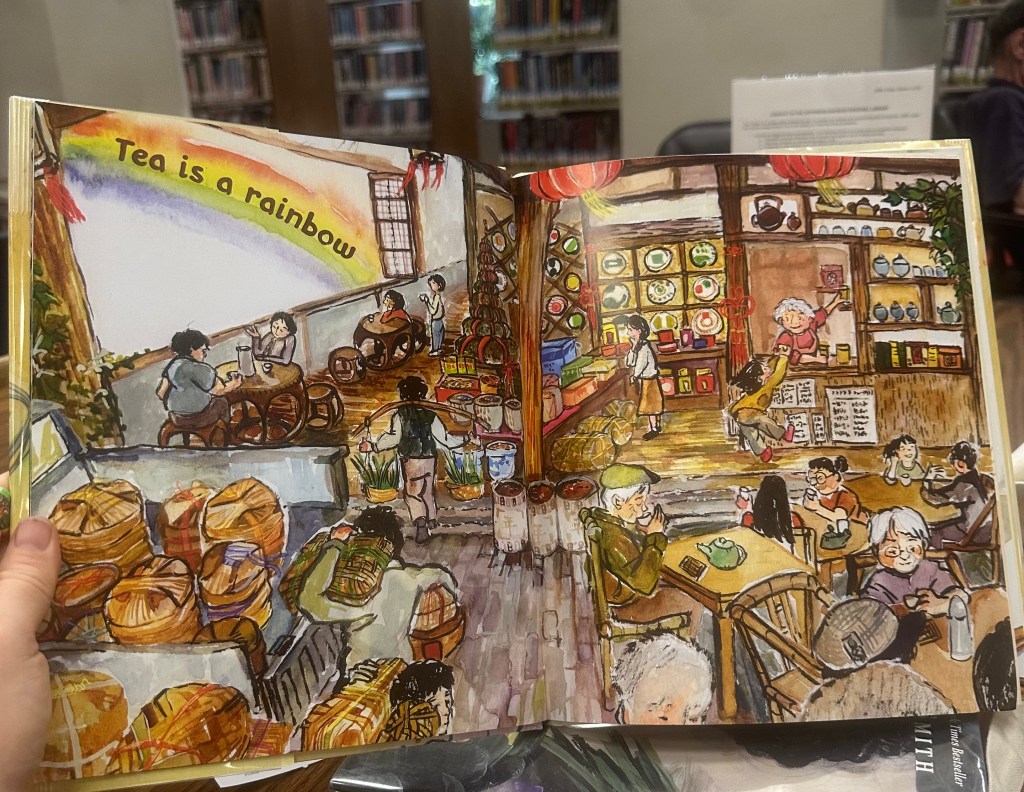
Cha’s illustrations meld together people gathering and preparing tea with others sitting down to enjoy a cup. Smoke curls across the pages, leading the eye from left to right. Some pages are saturated with interesting details such as her illustration of a busy tea shop. Sit down, cozy up, and enjoy.
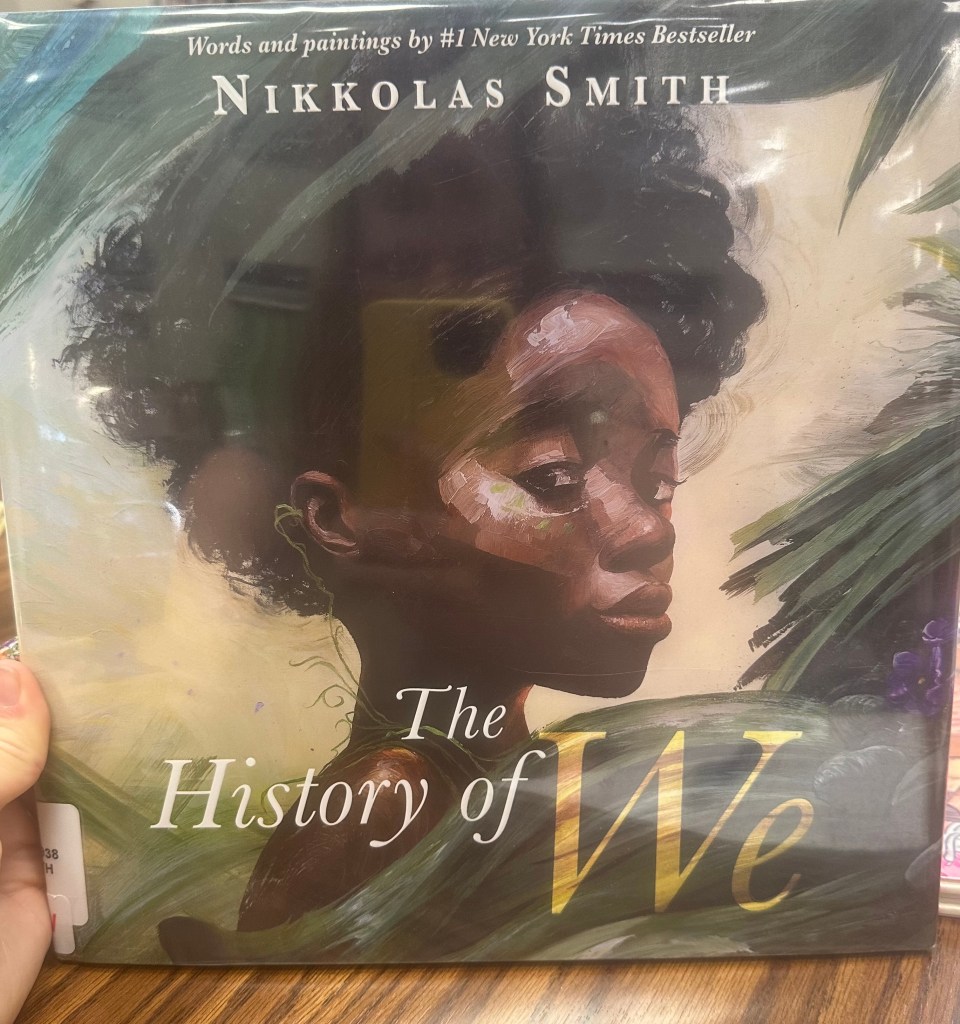
The History of We
Written and Illustrated by Nikkolas Smith
Art medium: Handpainted with acrylic on stretched canvas
Smith’s magical book opens with the mysterious phrase “What does the beginning look like?” This question echoes a classic childhood question: “Where did I come from?” Parents may assume this is about the birds and bees, but there’s a much deeper answer that Smith captures with lyrical text and stunning visuals in The History of We.
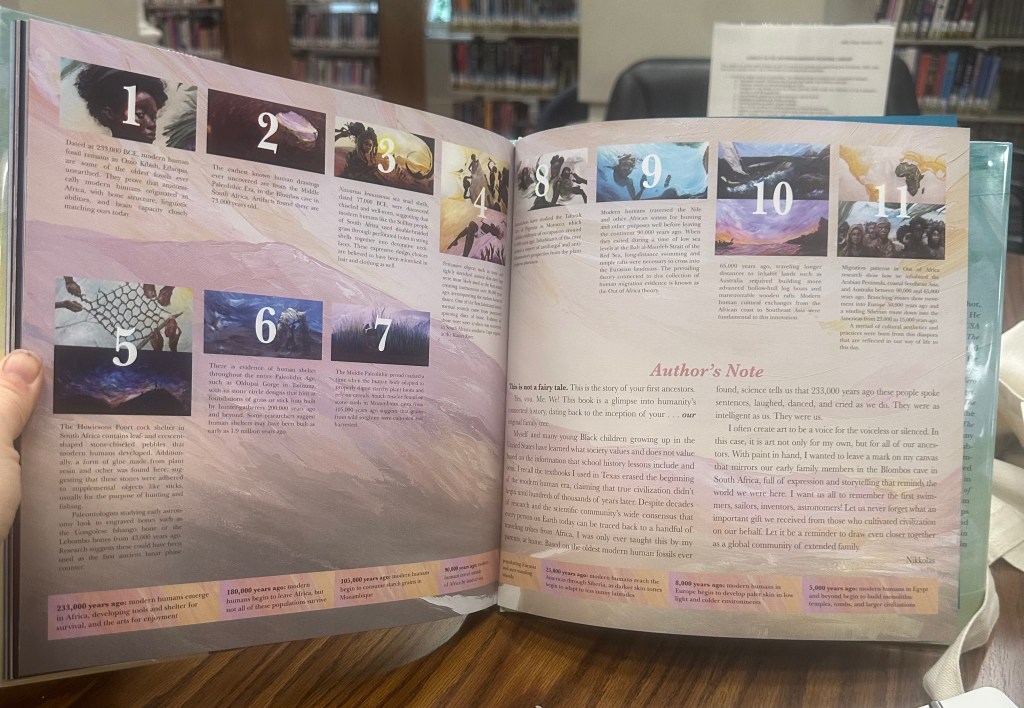
His informative Author’s Note states, “This is not a fairy tale.” He describes his project to resurrect a true but buried history. This book attempts “to remember the first swimmers, sailors, inventors, and astronomers.” A timeline places each page into a historical moment in our human history.
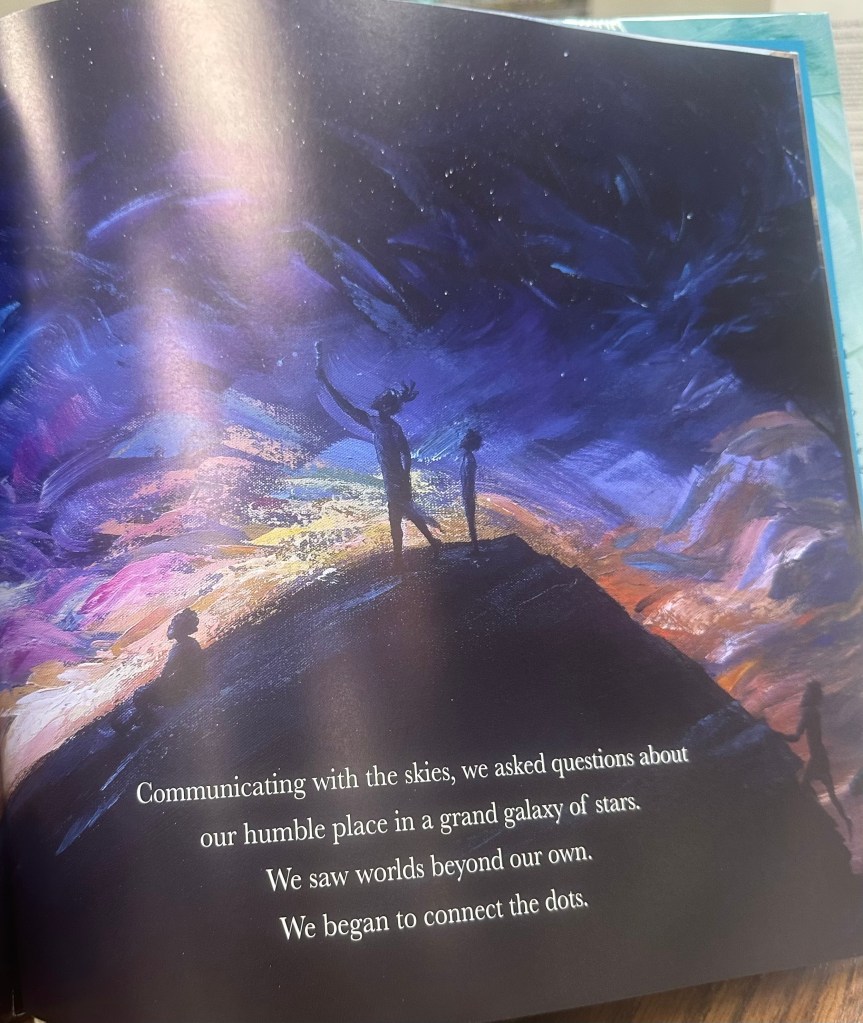
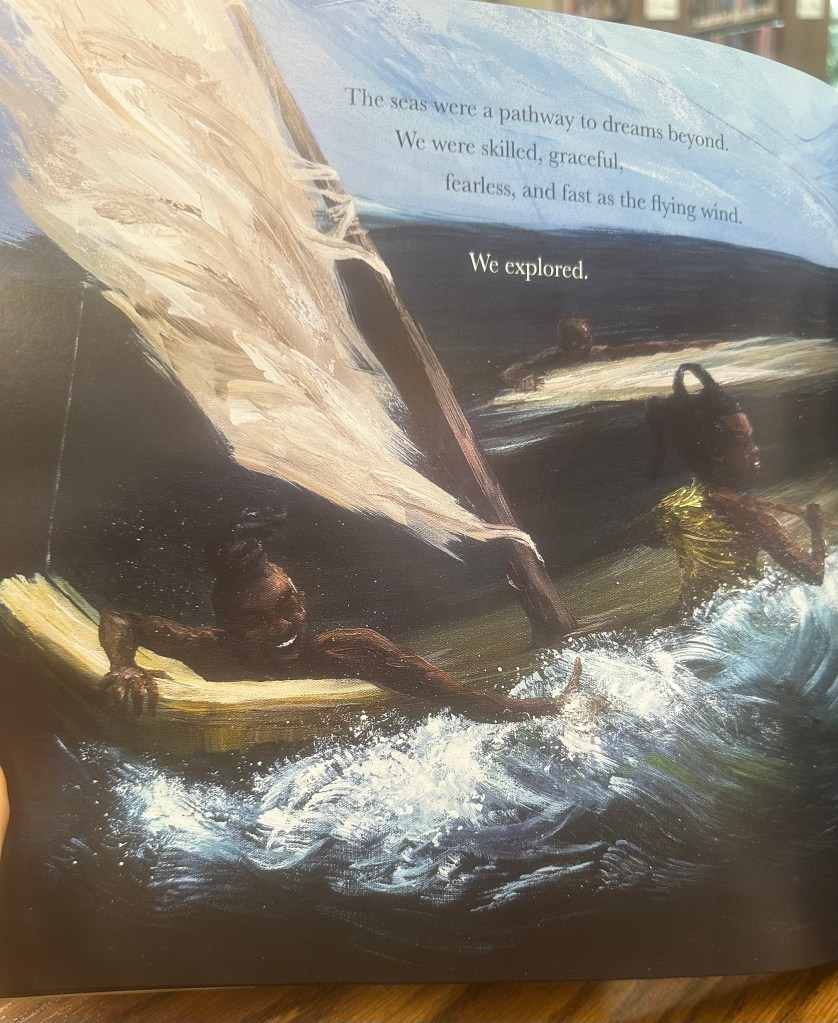
Smith writes, “With minds as intelligent as those born today/we sculpted words that made stories and/shared stories that made our community.” These powerful words connecting readers of today with the past are bolstered by Smith’s evocative illustrations. His characters sometimes seem to look directly back at us from the page. Smith depicts our ancestors enraptured in joyful moments, moments of flow. Readers will be drawn to these pages in their search for answers about the past.
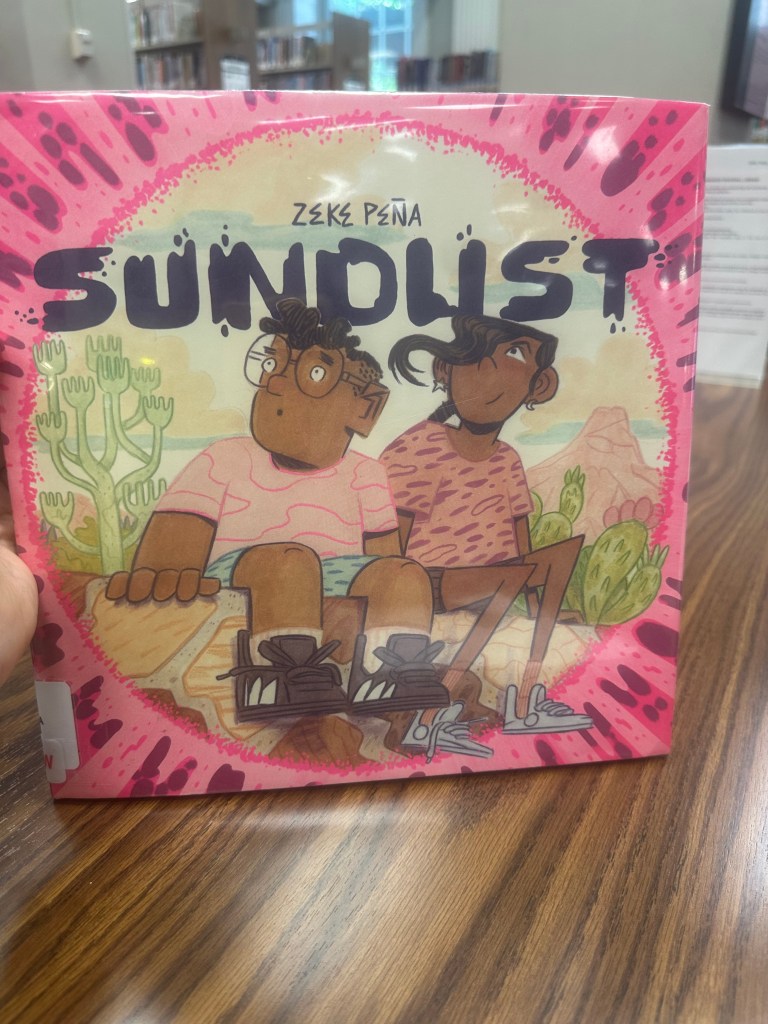
Sundust
Written and Illustrated by Zeke Peña
Published 2025
Art medium: graphite pencil, colored pencil, on watercolor paper in combination with coloring and layer effects, on an iPad and a Wacom Cintiq tablet
Peña bookends Sundust with similar phrases. The opening: “Where the rock wall ends,/The desert beyond begins.” The closing: “Where the rock wall ends,/The desert beyond begins./The people who call this home,/We shine like the sun.” In between, two children follow the sundust to explore the desert. They e ncounter animals and plants. The two even head to space to be imbued with the power of the sun. Peña’s book includes phrases in Spanish. His comic book-style drawing is warm and inviting. This is a book where setting, the desert, is an important character.
Readers may find setting books to be difficult to connect to. We are used to connecting with characters. Although Peña provides some speech bubbles for his characters, which reveal one of them to be a reluctant adventurer, the omniscient narrator’s words regarding the desert landscape dominate the book. When the kids find themselves transformed by the sun, this mysterious, mystical moment has less impact than it could. Who were they before the transformation? Who are they after?
Educator Corner
- Tapioca Stories published the English-language translation of Croco by Azul López. They specialize in bringing Spanish language books to English readers. Educators could browse their catalogue for books that highlight Spanish-speaking culture and/or support English-as-a-second-language learners.
- Tea is Love would pair well with a science class on acids and bases. Herbal teas can be used as a pH indicator. Acids and bases are part of the middle school science curriculum in Virginia. (Ch.5)
- Author Khorram and Illustrator Cha are both award-winning creators. Educators could feature their work as part of Asian / Pacific Island Heritage Month. Heritage months are an excellent way to systematically explore work from a wide variety of cultural perspectives. This is a stated goal of Virginia’s English Language SOL (“our students should be exposed to literary work across cultures, eras, and viewpoints”)
- Educators can use The History of We as a powerful text to introduce world history before the Middle Ages. While this topic is typically covered in depth in ninth grade, third graders are studying ancient civilizations. (Grade 3, The World)
- The History of We is a good primer to introduce students to the concept of studying history. Educators could use Smith’s timeline in the back of the book to introduce timelines as a data visualization tool. (Grade 3, The World)
- Examine Zeke Peña’s website, specifically his collection of illustrations accompanying editorials. This unique blend of illustrations and journalism provides educators with compelling materials for exploring informational texts. How do the illustrations capture factual information? (Middle School, studying informational texts).

