On the other end of this human spectrum, children rather terrified me. With their keen, sometimes brutal insightfulness, their unpredictability, and their unrelenting energy. I hadn’t lived around or in a child’s world for quite some time, so these little enigmas were foreign territory to me. They were far better than me, and much more evolved. But I knew enough to know that children, unlike many adults, are profoundly accepting of so many people and things. And they are odd and funny in the most imaginative of ways. And because of it all, they were far more approachable than I’d once figured them to be. The more I thought about children and about the art of children’s books, the more tremendously inspired I became.
“Brutal insightfulness, their unpredictability, and their unrelenting energy…” This is the magic brew that fuels children’s literature.
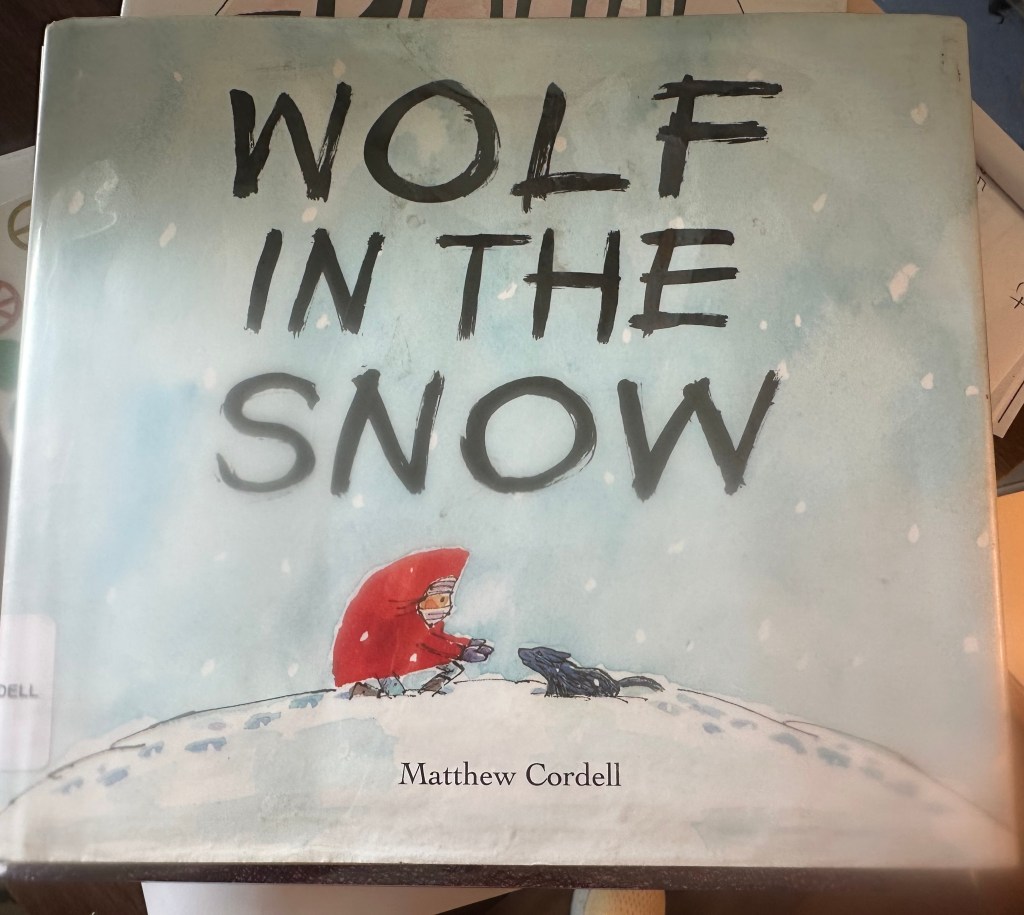
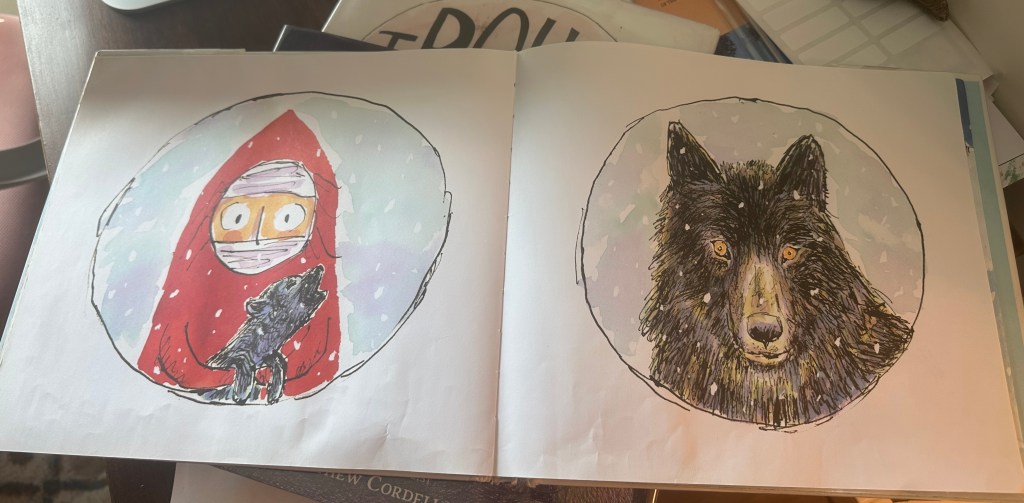
Wolf in the Snow is a wordless picture book that depicts an encounter between a girl and a wolf. In his acceptance speech, Cordell talks about the mysteriousness of the initial image he drew of girl, geometrically drawn as a lopsided triangle in a red coat with a hood up, and a realistically rendered wolf, facing off. The book is mysterious. It invites questions: How do you “read” a book without words? Why does Cordell employ such a different drawing style between the people and the animals? What is its effect? How is the limited color palette used to tell the story?
In wordless picture books, educators and adult readers can explore the concepts of composition (the organization of elements on the page), color palette, perspective, motion/stillness, and medium (ink, watercolor, etc). Readers can investigate how these elements of drawing advance or enhance a story. Readers can also ask why the book is wordless and what it would be like if they added words. Wordless picture books are a great entry point for examining how words and pictures work together in traditional picture books, where less-skilled readers often see the pictures as “add-ons” rather than central to the story.
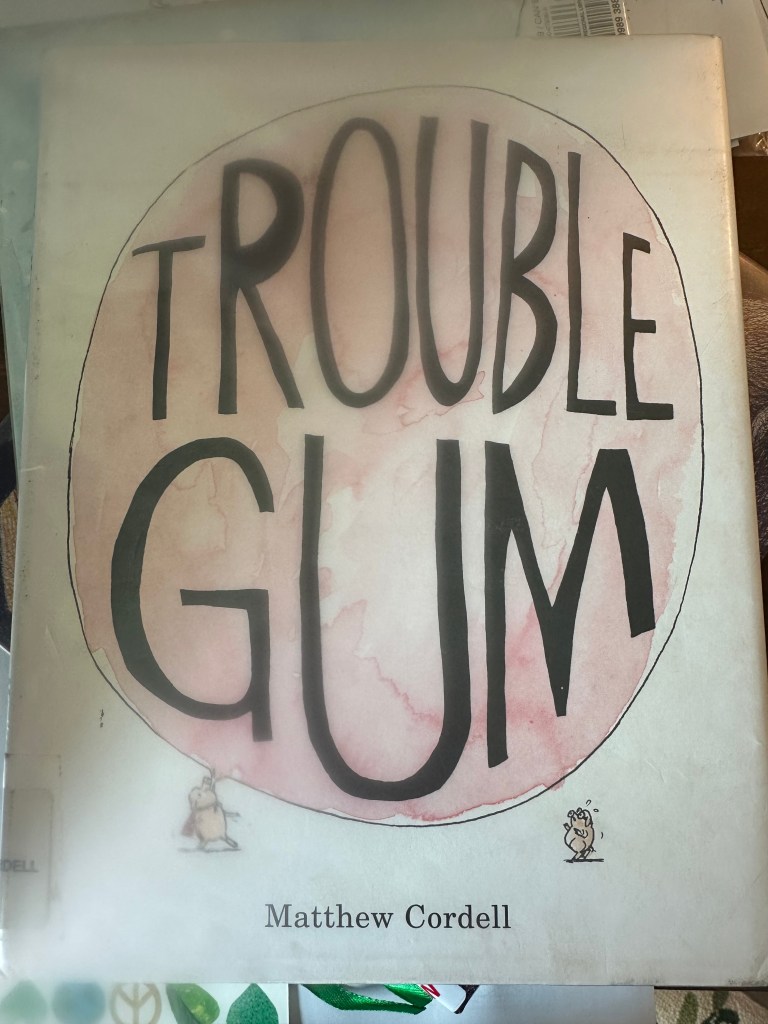
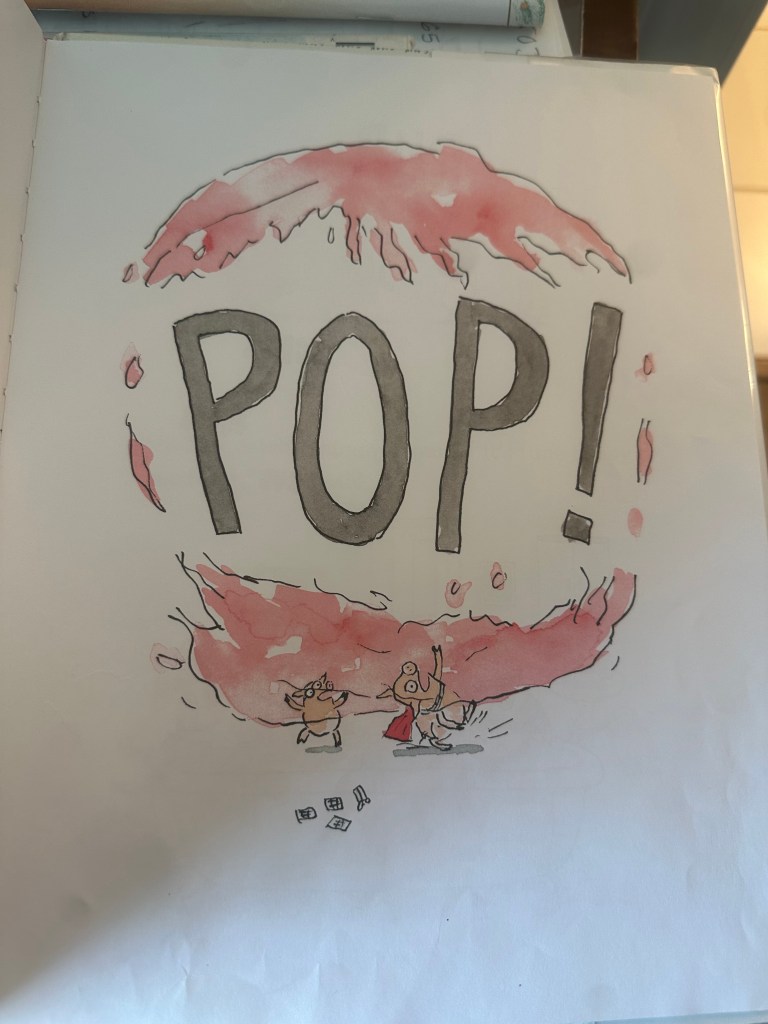
The next time I encountered Matthew Cordell was through his delightfully funny book Trouble Gum. Trouble Gum tells the story of two boys (depicted as pigs) having WAAAAAAAY too much fun with their gum. Kids and adults will both relate. A family favorite, this book includes the great read-aloud element of the sound of chewing gum. Kids will quickly catch on and be able to join in the fun of shouting SMIK SMAK. Adults can use this as an opportunity to introduce the concept of onomatopoeia. Onomatopoeia are an example of figurative language that appear in many picture books. Readers can make a game of spotting it during their next read-aloud.
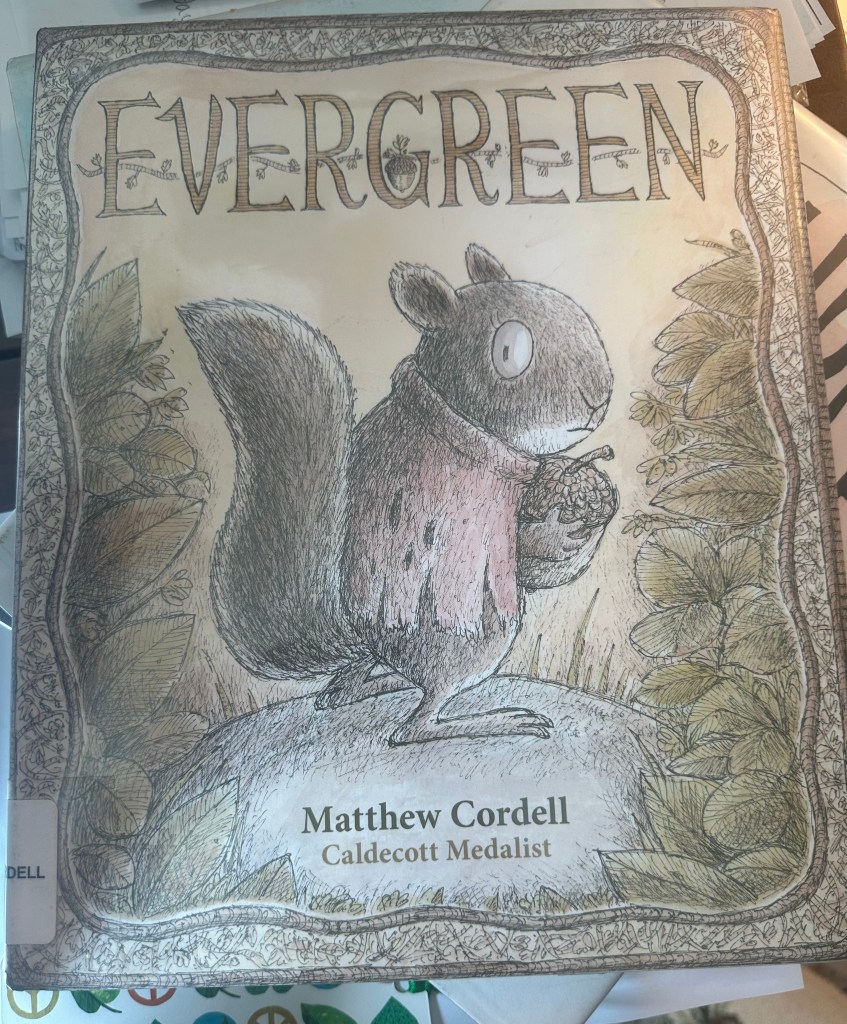
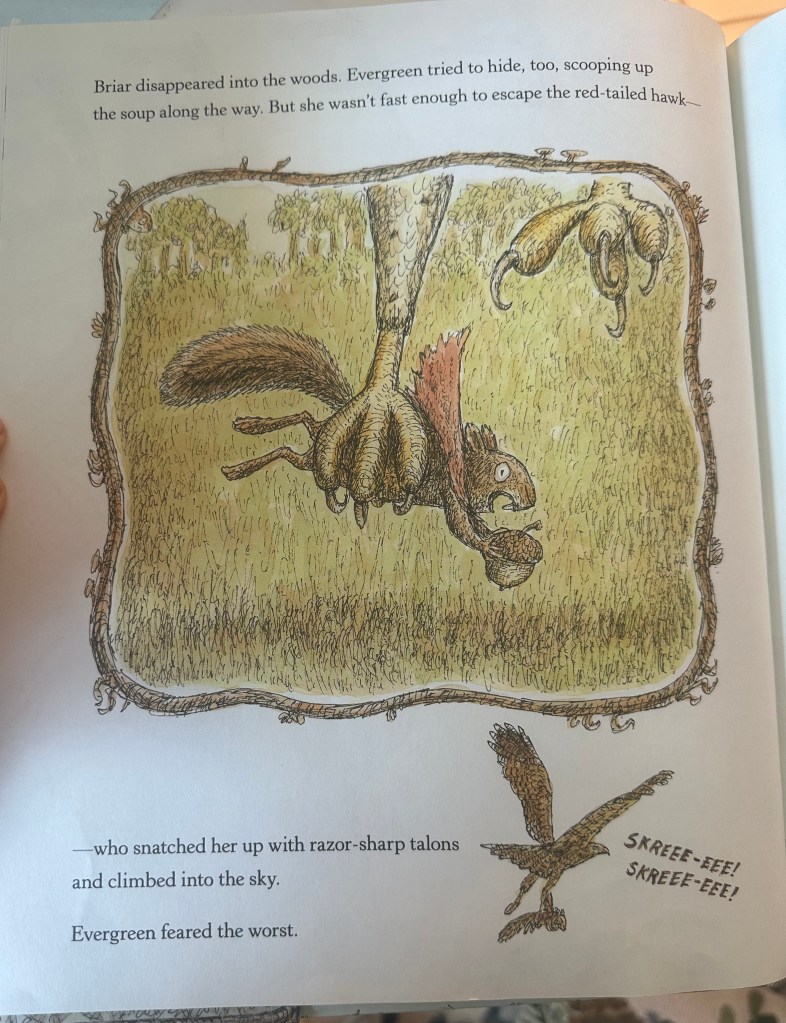
By this time, Matthew Cordell had become a “drop everything and read” author for me. Each time he published a new book, I kept an eye out. I enjoyed both Bear Island and Evergreen. Evergreen came in handy for our household. It’s the tale of a young squirrel who is sent out into the wild world to deliver soup. Evergreen is quite scared. Everything that can go wrong, does. So it’s that much more of a triumph when the soup gets delivered to its appreciative recipient.
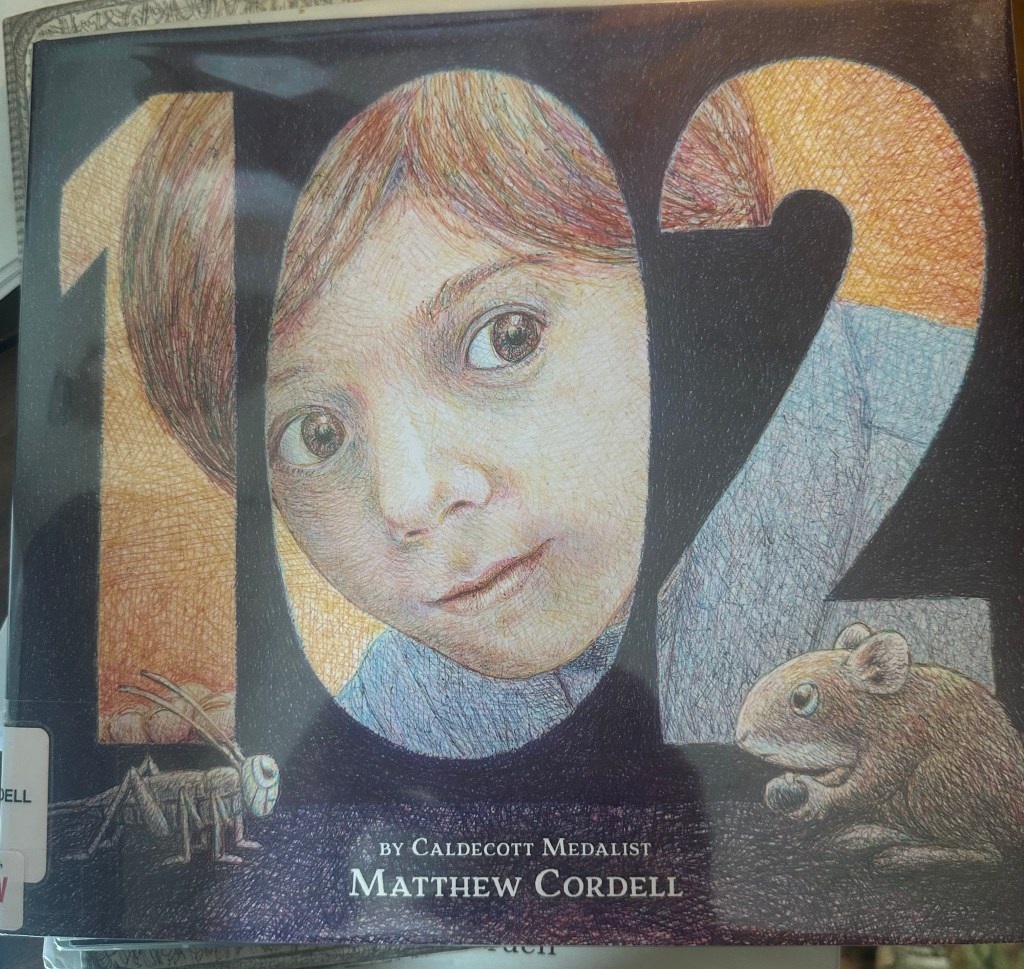
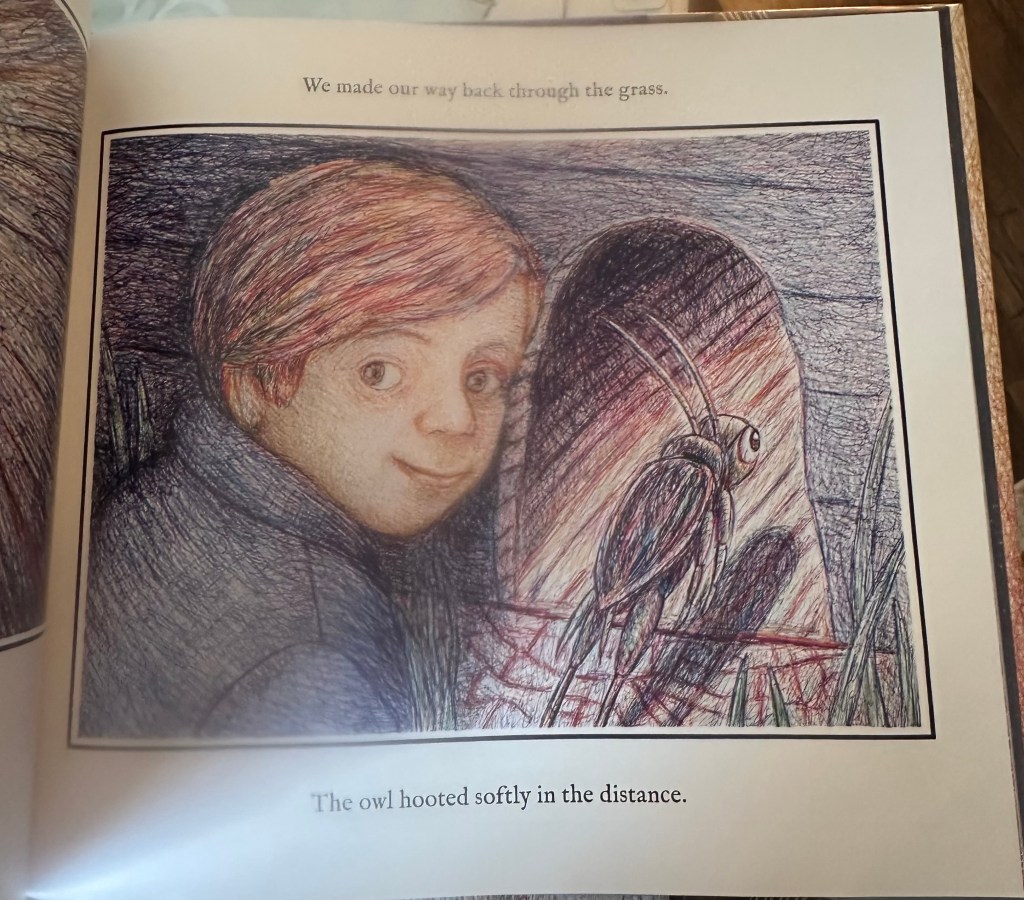
This year, Matthew Cordell has published his book 102 to rave reviews. Poor George has a high fever (102) and is put to bed by his loving mother, only to have his sleep interrupted by an improbable adventure. This masterful book perfectly combines the words of the story with the pictures to capture the crazy dream logic (or is it?) fueled tale. Cordell packs so much expression into the characters’ eyes and uses perspective to convey movement and focus. I loved the story. I was thrilled with this element of the About the Author section:
“One day, while rummaging through his kids’ art supplies, Matthew found a cheery multicolored, multiscented ballpoint pen. He liked it so much, he went on the draw 102 with it, layering many lines of color over one another. It took sixteen of these pens to draw all forty-eight pages of this book.”
Paired with Wolf in the Snow, 102 could be used to further explore how words and pictures work together to tell a story. Try reading the text without the pictures. Then have readers read it again, this time with the pictures. How do the pictures detract or add to the story? Consider the same artistic elements described above (composition, etc.). Look at the sentence length, punctuation, page breaks, and use of descriptive language, particularly verb choice. Begin with: How does this story make you feel? What does it make you think? Then look at these elements and ask “How do these elements create those feelings and thoughts?”
For extra fun, you could get your own multicolored ballpoint pen and try to create your own layered drawing.
Use Matthew Cordell’s wordless picture book Wolf in the Snow to study the impact of drawing in telling stories. Focus on elements such as composition, color palette, art medium*, perspective, motion/stillness to discuss how these elements impact a story. Include an activity where students write words to the story or draw an additional picture to advance the story. Students can attempt to alter the meaning of the story with their words and pictures or continue the narrative as depicted. *The copyright page or the about the author section usually includes information about the art medium of the book.
Recommended Grade Level: Although lesson plans could be developed for any grade level K-12 using this text, I recommend it for grade levels 2, 3, and 4. Lesson Objectives could cover the following Virginia Standards of Learning: RL.1 Key Ideas and Plot Details, RL.2 Craft and Style, RL.3 Integration of Concepts, and W.1 Modes and Purposes for Writing standards
Use Matthew Cordell’s book Trouble Gum as a dip back into picture books for older readers to explore the concept of onomatopoeia. Pair with books such as Clack, Clack! Smack! A Cherokee Stickball Story by Traci Sorell, illustrated by Joseph Erb. Check out the NYPL post on other picture books that feature figurative language.
Recommended Grade Level: A great read-aloud for any age group. Lesson Objectives could cover the following Virginia Standard of Learning 6.RL.2 Craft and Style. Describe the poetic elements in prose and poetry (e.g., rhyme, rhythm, repetition, alliteration, and onomatopoeia) and their intended impact on the reader.
Use Matthew Cordell’s book 102 to discuss the interplay of words and pictures in telling stories. In addition to artistic elements of composition, color palette, art medium*, perspective, motion/stillness, focus on literary elements of sentence length, punctuation, page breaks, and use of descriptive language, particularly verb choice.
Recommended Grade Level: Although lesson plans could be developed for any grade level K-12 using this text, I recommend it for grade levels 2, 3, and 4. Lesson Objectives could cover the following Virginia Standards of Learning: RL.1 Key Ideas and Plot Details, RL.2 Craft and Style, RL.3 Integration of Concepts, and W.1 Modes and Purposes for Writing standards. The study of figurative language technically begins in gradde 5 per the standards, but it is never too early to begin considering it.