Our current National Ambassador for Young People’s Literature, Mac Barnett, announced in Horn Book Magazine that he intends for his two-year term to focus on the Picture Book.
In his interview with Dr. Carla Hayden, Barnett said, “I just don’t think that there’s any art form like it, and I think picture books deserve a place alongside the novel, the short story, poetry, plays, as one of the great literary forms.”
I agree with Barnett, and I think he’d agree with me on this: Picture books encompass as wide a variety of complexity, style, and substance as novels.
Take a look at two picture books side by side for an example: Yuyi Morales‘ book Bright Star and Duncan Tonatiuh‘s book Funny Bones.
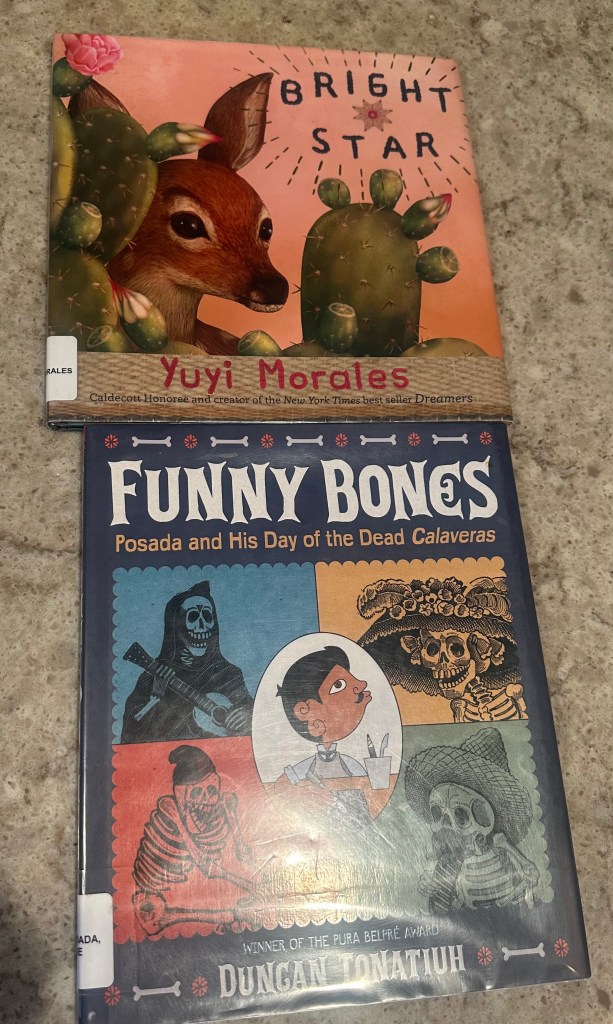
Readers can spot immediate differences in artists’ styles from the covers and perhaps make some guesses about what kind of book awaits them inside. Older readers may also be able to discern that Tonatiuh’s book is non-fiction.
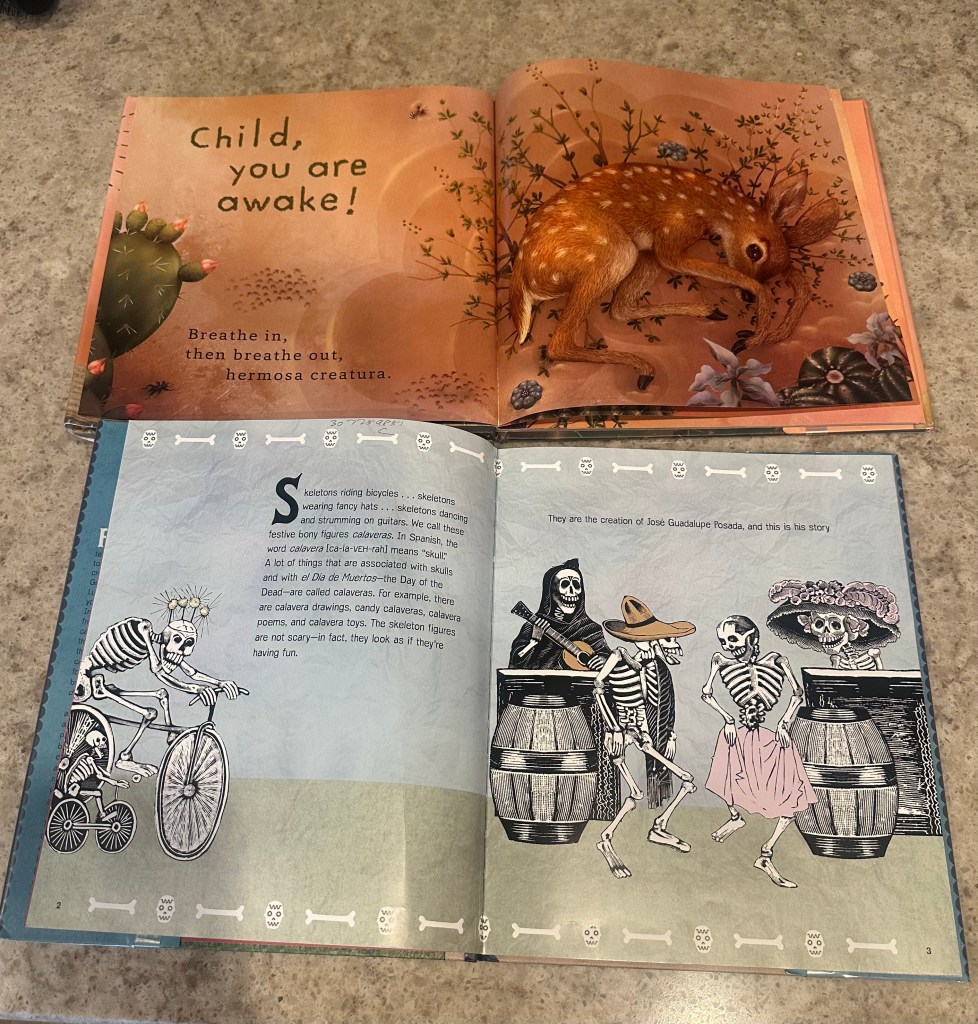
Both books incorporate Spanish into their opening pages. The art continues to be a study in contrasts, with Tonatiuh showcasing Posada’s style. The soft, textured look of Morales’ deer invites readers to stroke the page. The differences in the amount and complexity of the texts are immediately apparent. Who is the intended audience for these books? How might different ages experience these books?
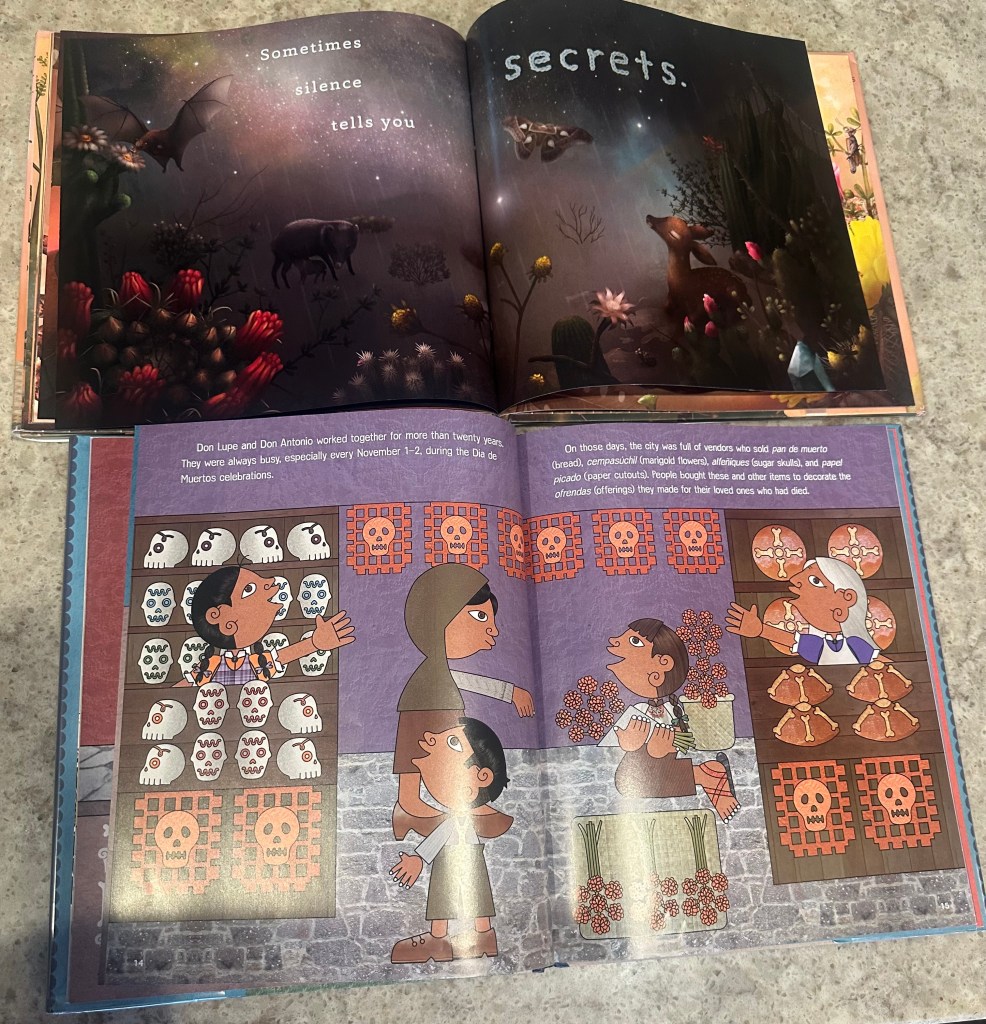
My favorite pages in each book again highlight the wide variety in artistic medium and style. Tonatiuh’s page demonstrates his classic, eye-catching codices-style of art, where geometry, patterns, and profiles create memorable scenes. Morales’s use of shadow and light, the way her drawings suggest texture, are so evocative of emotions. How do the pictures enhance the words in each book? What is each book’s relationship to information? To emotion?
There are so many things educators, learners, and readers can do with picture books, including lessons on how “picture books” encompass so many different styles and levels of complexity and cover such a huge range of topics.

