Throughout the school year, I compile a list of award-winning and starred picture books. You can read more about my sources here.
Although I’ll keep updating the list until the end of the school year, I thought it might be helpful to those making purchases for next year to see the list so far.
Anything by Rebecca Stead, illustrated by Gracey Zhang
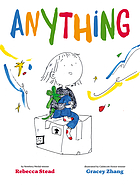
Multiple Starred Reviews
“A father and child mark the occasion with a birthday cake for their new apartment. Daddy encourages the youngster to blow out the candle. “What should I wish for?” “Anything.” Permitted to wish for three “Anythings,” the protagonist requests “a rainbow in my new room,” a big slice of pizza, and to put off bath time. Daddy obliges, but later, the child is awakened in the night by frightening noises…A sensitive, beautifully wrought meditation on change. (Picture book. 4-8)” (Source: Kirkus Reviews)
Find It at a Library Near You on WorldCat
The House That Floated by Guojing
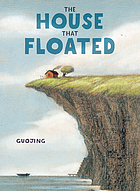
Multiple Starred Reviews
“Residing on an isolated cliff in a tiny red house, a couple spend their days fishing, dreaming, and watching the seasons pass. Soon they’re joined by a new companion, a baby whom they nurture year by year, sharing their love for moonlit nights and dolphin watching. As enchanting as their life is, the water that surrounds them is slowly, steadily rising, threatening to swallow their home, once far above sea level. With bravery and trust, the trio build a raft and transport their dwelling to higher ground, where waiting inhabitants hoist it into a peaceful green meadow. This enticing story is told wordlessly, with painterly landscapes providing the perfect setting for tender, intuitive interactions among a small cast of characters.(Picture book. 4-8)” (Source: Kirkus Reviews)
Find It at a Library Near You on WorldCat
Island Storm by Brian Floca and illustrated by Sydney Smith
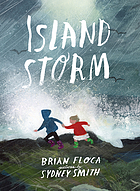
Multiple Starred Reviews
“While their parent collects laundry that has flown off the line, the children—presumably siblings—walk away. “Now take my hand / and we’ll go see / the sea before the storm.” At first that seems the beginning and ending of their adventure as they stand on worn stones watching the waves “SMASH on the rocks and EXPLODE into spray.” Then something compels the kids to continue. “You pull on me, I pull on you, and we decide to go on,” the author repeats in what feels like a chant. Only too late do the siblings realize that they’ve gone too far; they race for home through the rapidly approaching dark and rain, toward light and warmth and their relieved parent…The power of nature captivates and compels in this phenomenal tale of pushing limits.(Picture book. 4-8)” (Source: Kirkus Reviews)
Find It at a Library Near You on WorldCat
A Place for Us by James Ransome
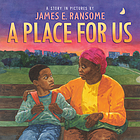
Multiple Starred Reviews
“At the end of the school day, a mother picks up her son from school. Parent and child..hug before stopping for a meal at a fast-food restaurant. At dusk, the pair walk to the local library, where the boy does his homework and the mother reads a novel.. At closing time, the librarian comes to turn out the lights. After exiting the library, parent and child walk to a park, where they talk, and the youngster plays in the fall leaves. In the dark, the two settle down on a bench with the city lights and skyline as backdrop. While the child sleeps, his head resting in his mother’s lap, she remains vigilant throughout the night…Readers of this empathetic tale will come away resolved to work toward a world in which all people’s needs are met. Thought-provoking, heartbreaking, and moving. (Picture book. 4-8)” (Source: Kirkus Reviews)
Find It at a Library Near You on WorldCat
Fireworks by Matthew Burgess and illustrated by Cátia Chien
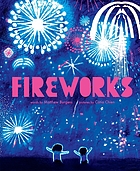
Multiple Starred Reviews
Randolph Caldecott Award
“As the book opens, the brown-skinned, dark-haired youngsters explain that “in the summer, the sun rises between buildings on our block to greet us at breakfast and it beats warmer and brighter when we venture out across steamy city sidewalks.” At noon, relief arrives as the children gleefully run through the water sprayed by a fire hydrant. On their way to a local bodega, they wind their way through a park before devouring ruby-red pieces of watermelon. Words dance across the page (“Shooka-shooka shooka-shooka”) as the kids move to the sounds of salsa music. Back at home, Grandma cooks dinner for the children, and as night falls, the youngsters scale a “rickety ladder” to the rooftop, where they wait until…“POP!” Fireworks rain down in a literal explosion of colors and words cascading over silhouetted images of the kids…A radiant celebration of all things summer. (Picture book. 4-7)” (Source: Kirkus Reviews)
Find It at a Library Near You on WorldCat
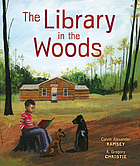
The Library in the Woods by Calvin Alexander Ramsey and Illustrated by R. Gregory Christie
Coretta Scott King Award
“After crop failures force a family to relocate to town, a country boy is delighted to discover a whole library there for him and other members of the Black community.
The move to Roxboro, North Carolina—inspired by the author’s own experiences growing up in the 1950s—brings changes welcome and otherwise to young Junior’s life, but a wonderful one comes from a schoolmate’s revelation: “We have our own library.” A small building in a nearby clearing contains a dazzling world of book…A tribute to a community treasure, understated but rich in feeling. (Picture book. 6-9)” (Source: Kirkus Reviews)
Find It at a Library Near You on WorldCat
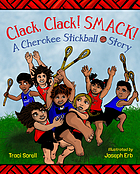
Clack, Clack! Smack! A Cherokee Stickball Story by Traci Sorell, illustrated by Joseph Erb
Odyssey Award
“Two Cherokee teams play a game of stickball in Tahlequah, Oklahoma. Vann feels insecure about having missed a key shot in last week’s match. “Stickball requires speed,” after all, and his “towering body” won’t cooperate. As Vann and his team, the Eagles, take to the field against the Redhawks, they “zip,” “chase,” and “rush” for the ball, their wooden sticks clashing with a “CLACK, CLACK!” Coach gives the team a pep talk in Tsalagi, the Cherokee language. He reminds them of gadugi, the importance of working together. As the players return to the field to finish the game, Vann’s best friend, Jesse, gives him an encouraging smile. The game is now tied. Can Vann and his team win?…Stand and cheer for this fast-paced tale of sportsmanship and community. (Tsalagi glossary, photographs) (Picture book. 4-8)” (Source: Kirkus Reviews)
Find It at a Library Near You on WorldCat
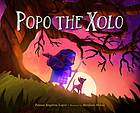
Popo the Xolo by Paloma Angelina Lopez and illustrated by Abraham Matias
Pure Belpre Award
“Popo, a Xoloitzcuintle (a Mexican hairless dog with great significance in many Indigenous cultures), spends his evenings sitting on Nana’s lap as she watches her novelas, soothing her aches with his tiny, warm body. Nana spends her days cooking, cleaning the floors, and tending to her familia. One night, Nana sits on her comfy chair for the last time; accompanied by Popo, she soon steps into the Aztec underworld, Mictlān, where the dead must journey across nine levels to reach eternal rest…Gently magnificent. (information on the nine levels of Mictlān and on the Xoloitzcuintle, a note on loss, glossary) (Picture book. 4-8)” (Source: Kirkus Reviews)
Find It at a Library Near You on WorldCat
Croco by Azul Lopez
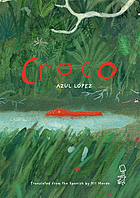
Mildred L. Batchelder Award
When a crocodile tumbles into a deep hole, a parade of well-meaning animals offer advice about how he might escape…The visual storytelling is extraordinary; López employs compositional dynamics that create tension and release. Croco’s position at the bottom of each spread emphasizes his predicament, while the helpful animals perch safely above, creating a clear visual hierarchy between the trapped and the free…The story captures both individual character and collective community effort, showing failed collaboration giving way to successful self-reliance without undermining the value of the friends’ attempts to help. This is picture-book creation at its finest—creators who understand their audience completely, crafting a tale that works equally well for storytime groups and one-on-one sharing.(Picture book. 4-9) (Source: Kirkus)
Find It at a Library Near You on WorldCat
Alberto Salas Plays Paka Paka con la Papa by Sara Andrea Fajardo and illustrated by Juana Martinez-Neal
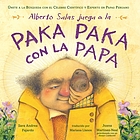
Robert F. Sibert Informational Book Award
“Alberto Salas is on a mission: to discover and document all the potatoes he can “before they’re lost for good.” The renowned Peruvian agronomist—affectionately portrayed as a rosy-cheeked, wiry-haired, squat man clad in a yellow coat—plays the game of potato paka paka (or hide-and-seek), scouring the Andes to support the development and proliferation of potatoes across the world. Each day the growing effects of climate change make his endeavor more urgent…A remarkable path to starch-dom. (author’s and illustrator’s notes) (Picture-book biography. 4-8)” (Source: Kirkus Reviews)
Find It at a Library Near You on WorldCat
Wanda Hears the Stars: A Blind Astronomer Listens to the Universe by Amy S. Hansen with Wanda Diaz Merceds and illustrated by Rocio Arreola Mendoza
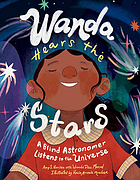
Schneider Family Book Award
“In Gurabo, Wanda’s Puerto Rican hometown, the rainforest hid the stars. So when 9-year-old Wanda witnessed a meteor shower, she “lit up with wonder.” Her curiosity persisted; in college, Wanda studied physics and “aimed for the stars.” But in Wanda’s third year, she went blind as a result of diabetes, and “the stars had dimmed, too. How could she study what she couldn’t see?” Fortunately, a friend introduced Wanda to radio waves that captured sounds from space, and “she heard a path to the sky.” At NASA, Wanda used sonification—the conversion of visual data into sounds—to study the stars. Still, she worried about keeping up with her colleagues. Through sonification, however, Wanda discovered oscillations in a star’s energy, something nobody else had noticed—confirming that “using sound didn’t mean she had less information. It just meant she had to work differently…”Uplifting and informative. (glossary, authors’ notes, more information on Díaz Merced, timeline, resources, bibliography) (Picture-book biography. 6-9)” (Source: Kirkus Reviews)
Find It at a Library Near You on WorldCat
Many Things at Once by Veera Hiranandani and illustrated by Nadia Alam
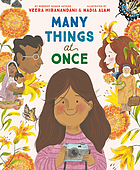
Asian/Pacific American Award
“As the young narrator looks at old family photographs, her parents tell her stories about her grandparents. Her maternal grandmother was a Jewish seamstress in Brooklyn, while her paternal Indian grandmother liked to cook “spicy sai bhaji and bubbling dal.” Her maternal grandfather escaped the pogroms in Poland, while her paternal grandparents fled their home during the Partition of India. Years later, her parents met in New York. They tell her she’s lucky “to be both Indian and American, to be both Jewish and Hindu, to be part of many things at once.” But the girl sometimes feels as though she doesn’t quite fit in anywhere—she doesn’t know the words to the Hebrew songs at Passover, and she doesn’t understand Hindi like her relatives do. At school she learns that no two butterflies are exactly the same. As she considers this idea, she realizes that she, too, is unique and part of many things at once…A quiet reflection on belonging and acceptance. (author’s note) (Picture book. 4-8)” (Source: Kirkus Reviews)
Find It at a Library Near You on WorldCat
Kaho’olawe: The True Story of an Island and Her People by Kamalani Hurley and illustrated by Harinani Orme
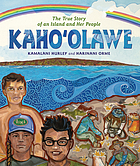
Asian/Pacific American Award
“In an author’s note, Hurley explains that, like many Native Hawaiians, she was taught that Kahoʻolawe was merely a “barren rock.” Nothing could be further from the truth. Though Kahoʻolawe isn’t “as lush as the other Hawaiian islands,” wildlife thrives here, as did the Polynesian wayfinders who settled here years ago. But the arrival of newcomers who often brought with them invasive species—goats brought by Capt. George Vancouver in 1793, for instance—disrupted the environment. When World War II began, the U.S. military took over Kahoʻolawe for target practice; people were kept away. Hawaiian residents were told that the island was suitable only for military testing, but in the 1970s, activists started to advocate for its protection, guided by the principle of aloha ʻāina, or “deep love of the land.” In 1993, the state of Hawai‘i assumed control of the island. Hurley’s robust prose paints a vivid portrait, with each page ending in a brief statement from the island’s point of view…An incredible, brilliantly told story of persistence, advocacy, and love. (list of Hawaiian sayings, author’s and illustrator’s notes, photographs, timeline, glossary, ways to help, resources, selected references) (Informational picture book. 7-11)” (Source: Kirkus Reviews)
Find It at a Library Near You on WorldCat
Chooch Helped illustrated by Rebecca Lee Kunz and written by Andrea L. Rogers
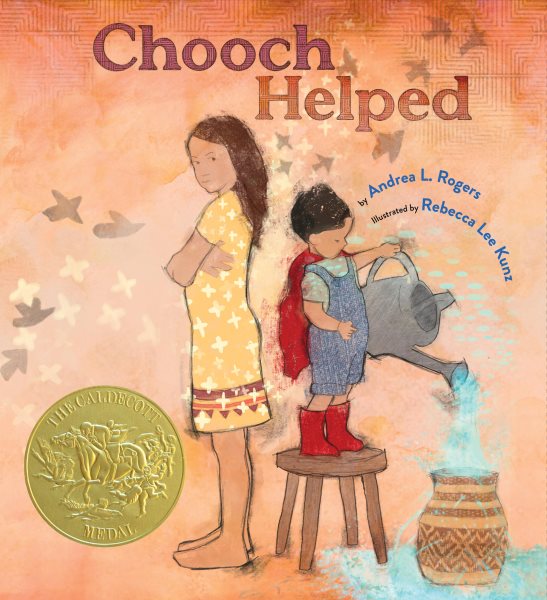
American Indian Youth Literature Award
“Sissy has a mischievous 2-year-old brother called Chooch—an affectionate nickname based on the Cherokee word for boy or son. No matter what the usdi (baby) does, he “just gets away with everything”—from painting streaks through Elisi’s mural to making a mess of Edutsi’s grape dumpling flour.” (Source: Kirkus Reviews)
Find It at a Library Near You on WorldCat
102 by Matthew Cordell
Multiple Starred Review
“Home sick with a fever, pale-skinned George is surprised when a mouse with something tiny (a bean?) in its mouth skitters across the kitchen floor. Mama captures the “little intruder,” and George puts it in an empty tank in his bedroom. By bedtime, poor George’s fever has risen to 102. “At precisely 1:02 A.M.,” a cricket wakes George, shrinks him to her size, and leads tiny George to meet a mother mouse. She explains that Father went to fetch the final ingredient for a 102-bean soup meant to heal their ailing little one, “but he’s not returned.” George retraces his steps and, regrown, apologizes to and releases Father. Waking at (you guessed it) 1:02 P.M. to 102-bean soup of his own, George recovers. “Perhaps you are asking, ‘Was it all a dream?’ ‘Was it all real?’” George, now 102 years old, holds both mementos and answers…Utterly entrancing. (Picture book. 4-8)” (Source: Kirkus Reviews)
Find It at a Library Near You on WorldCat
Cat Nap by Brian Lies
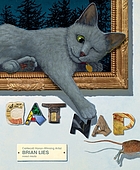
Multiple Starred Review
“In the late afternoon, a kitten’s attention is seized by a wayward mouse. When the rodent jumps into a framed poster for the Metropolitan Museum of Art, Kitten is close behind. What ensues is a chase across the museum—and into a variety of pieces spanning time and geography, all of which hail from the Met and are labeled and further explained in the backmatter. On each spread, both Kitten and his prey are visually transformed, matching the style of the work in question—and wreaking a bit of chaos along the way. At last, it’s the lure of home and dinner that brings Kitten’s wanderings to an end…Utterly beautiful, playfully fun, and, above all, breathtaking. (Picture book. 3-6)” (Source: Kirkus Reviews)
Find It a Library Near You on WorldCat
Shabbat Shalom: Let’s Rest and Reset by Suzy Ultman
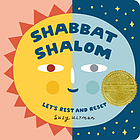
Sydney Taylor Book Award
“Learn the weekly traditions of Jewish Shabbat in this whimsical board book, part of the unique My First Books of Jewish Culture series! Incorporating both Jewish traditions and Jewish culture, offering a unique depiction of Judaism, author and artist Suzy Ultman melds her own Jewish upbringing with her current trend-setting aesthetic to create a much-needed series of gorgeous, appealing, and perfectly simple books that will inform and entertain Jewish and non-Jewish readers alike. With vibrant illustrations and text in bold, clear type, this board book is the perfect way to celebrate Judaism with the whole family!” (Source: Penguin Random House)
 Rachel Vogus' Habits and Hobbies