In one of my recent posts about Author Studies, I mentioned that such studies are not limited to reading the author’s books.
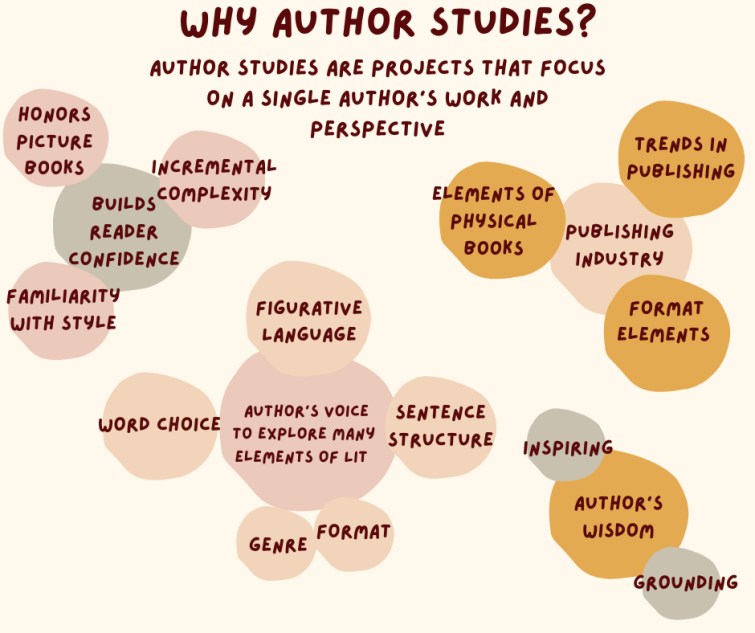
Let’s dive into exploring the author’s perspective through examining informational texts.
According to the Virginia Standards for Learning for English, students are meant to work with informational texts. The Standards aim to expose students to a variety of texts so that students may analyze their meaning, learn about their characteristics, and use them to construct arguments for works of their own.
Continuing on with Kate DiCamillo as our example, DiCamillo has given speeches, interviews, and posted her own videos. There are book reviews to read about her work, as well as news articles (and videos) written about her. Some examples are below:
Speech: TeachingBooks | Author & Book Resources to Support Reading Education and Essays: https://www.katedicamillo.com/on_writing-2/
Interview/News Article: What Kate DiCamillo Understands About Children | The New Yorker
Interview: Love Stories: Kate DiCamillo on the Hope, Humor, and Love that Fill her Books | School Library Journal and – YouTube, more interviews: https://www.katedicamillo.com/for_press/
See book reviews and all general materials: External Resources – Kate DiCamillo, National Ambassador for Young People’s Literature – Research Guides at Library of Congress
News Story: Superfans rave about Kate DiCamillo’s 25-year-old ‘Because of Winn-Dixie’ (example) and Beloved Kid’s Author Kate DiCamillo On Getting 473 Rejection Letters – YouTube
Author studies include exploring texts created about the author, as well as nonfiction texts by the author. In addition to allowing students to continue to understand an author’s voice and perspective, these texts often offer inspiration (either in the form of direct how-tos or uplifting stories) and grounding — authors are real people with foibles and quirks.
 Rachel Vogus' Habits and Hobbies