This post is part of a series “Thinking Like a Librarian at Home: Collection Development and Management”. The first post in the series can be found here. This series is for anyone who is looking to use purpose-driven practices to find books and other materials to add to their home library.
In order to successfully build a home library, you have to know your readers*. This is a core principle for Collection Development & Management.
Here’s the common sense part: knowing your readers allows you to select materials that match their interests. Here’s the part that takes a bit more thought: knowing your readers allows you to set goals for your collection: it’s the heart of purpose-driven Collection Development & Management.
Many of us are taught from a very young age about how the library is organized. We are shown sections of the library like “fiction” and “non-fiction” We discover or we are told which genre of books we like (and which we do not) such as sci-fi, fantasy, popular science, biography, poetry. Schools and libraries often put up displays of “diverse books” to help us broaden our tastes and discover new books.
But in her book, Dear Ally, How Do You Write a Book? Ally Carter writes that when readers are seeking out a book just like the last one they read, what they are really chasing is a feeling. And feelings are not contained within fiction or non-fiction or a particular genre.
If you’ve been following along with my “How to Do a Book Talk” series on Instagram, then you’ll know about Nancy Pearl’s Four Doorways as an alternative way to think about which books appeal the readers* in your home. Here’s a quick primer on the Four Doorways.
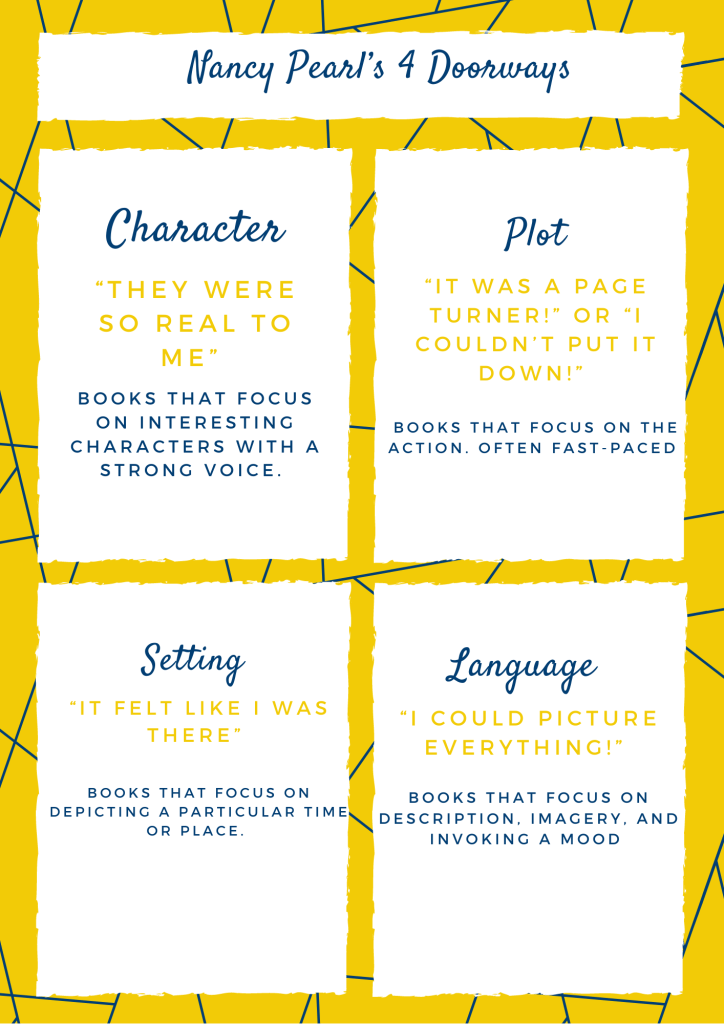
Check out this talk from Pearl for more info.
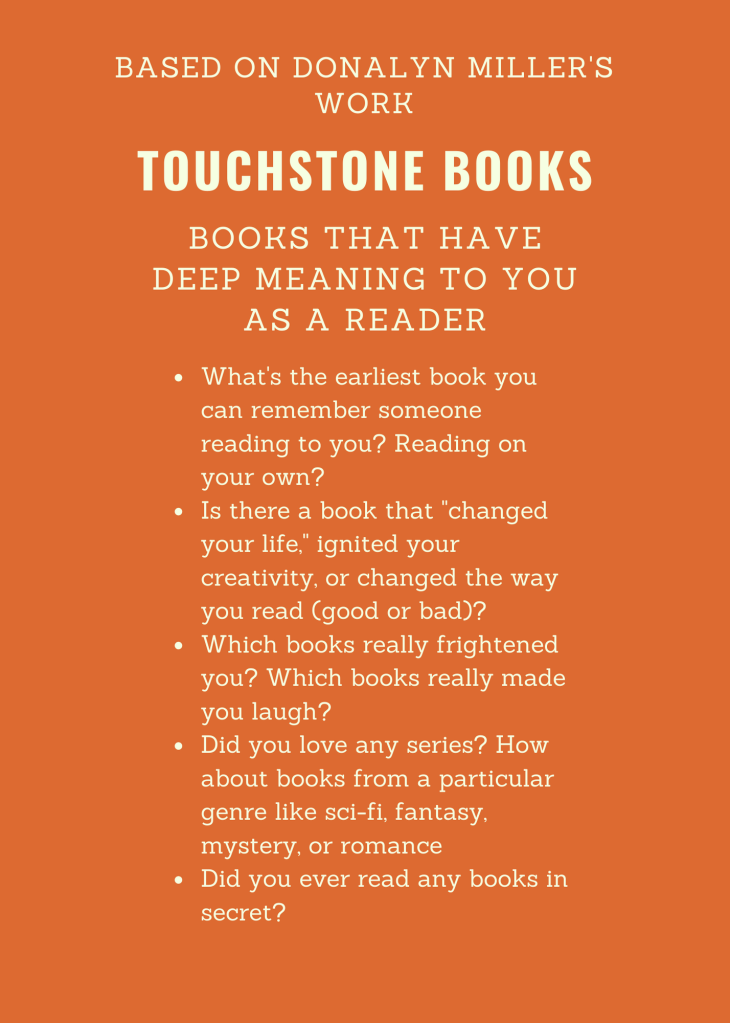
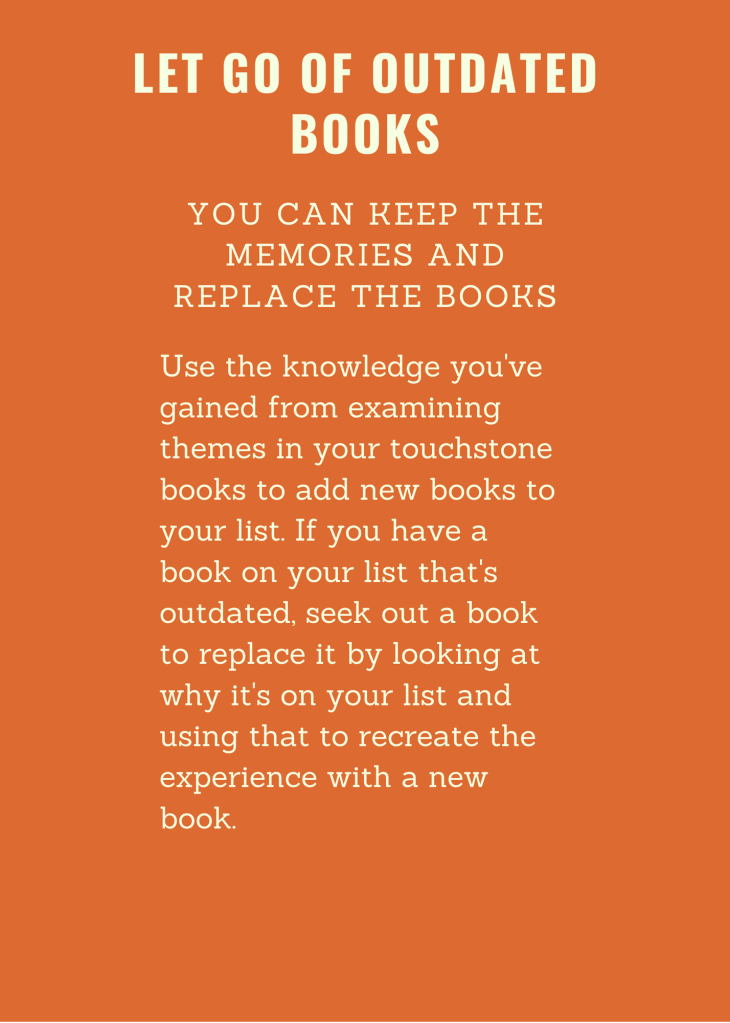
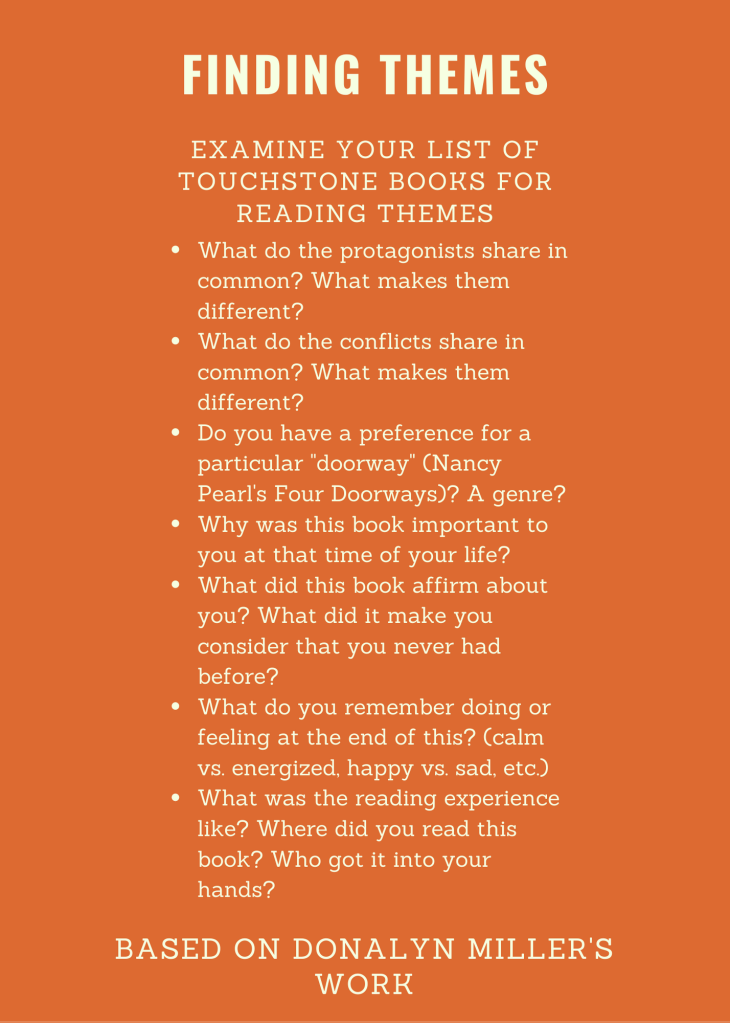
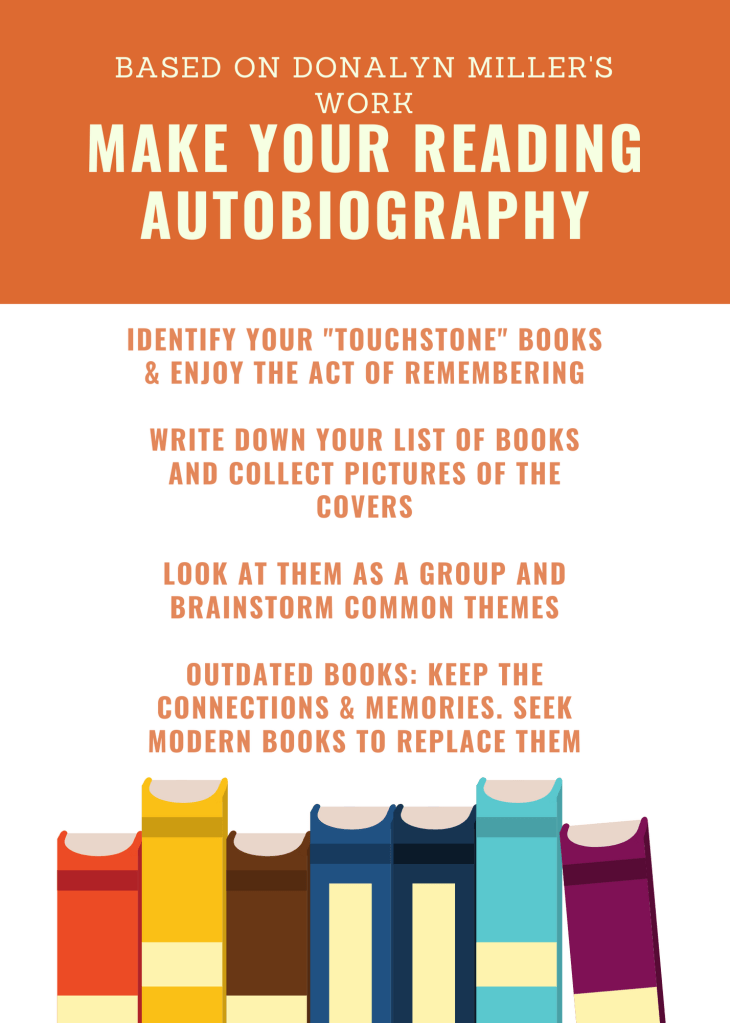
You may also have gotten started getting to know yourself as a reader through working on my series “Reading Autobiography and Touchstone books”. Both of these concepts come from Donalyn Miller. In this series we worked on remembering books that had meaning to us, focused on books that evoked strong feelings in us (fear, laughter, sadness, etc.), and thought about how those books came to be part of our reading lives. We drew out common themes that brought our touchstone books together, whether that was a feeling, a type of protagonist or conflict, or an experience around reading them (such as having someone important to you give you the book).
As we collect information about which books appeal to the readers* in our house, we need to consider what Chad Everett writes in his excellent piece There is no diverse book: “there are no diverse texts. It is in the transaction (Rosenblatt, 1986) between the reader and the text that a text’s diversity is realized.” Everett argues that books in a collection exist along a continuum:
As the reader moves from one end of the the continuum to the other, he moves from texts that affirm his life and experiences toward those that affirm the lives and experiences of those different than the reader.
If you want to have a purpose-driven collection (whether its to build this continuum or to support another purpose), you have to know your reader to build a collection that responds to their life experience. In other words, a diverse collection is grounded in the readers’ life; it affirms their experience and it also asks them to look beyond their own experiences.
We’re going practice getting to know the readers* in your household (including yourself) through getting to know what they like and getting to know who they are. Today’s post will focus on the what they like part and the next post will focus on who they are.
As I outlined above, you can begin to get to know what appeals to your readers by using Nancy Pearl’s Four Doorways and by starting a Reading Autobiography discussion in your household. These activities are great for enthusiastic readers in your home.
But what if you want to find resources for someone who isn’t showing a lot of interest in books yet? I have an activity that will work for seasoned readers and budding readers alike. You can use it on yourself or others in your household.
I call it Match Play Style to Books.
Here’s how it works:
- For a few days to a week take 15 minutes to sit in observation of another person in your household. If you are using this activity to discover more about yourself, then set a daily alarm that reminds you to stop for a few minutes and reflect back on how you spent the last fifteen minutes.
- Take notes (or write reflections) on the type of play/work that occurs during those fifteen minutes. Write down what you see happening. Try not to get involved or be noticed. (Be ethical, explain what you are doing to members of your household prior to starting this process and get their consent.)
- After you’ve collected a few days worth of notes, take 15 to 20 minutes to re-read what you’ve written and remember what you observed. Ask yourself some questions, like: how did they make decisions about what to do? what were they trying to learn or understand? how did they figure it out? what were they creating and how did it show up in their play?
- After observing, taking notes, and reflecting try to categorize their dominate form of play (or notice if any showed up a lot or not at all) between these four types: Make, Wonder, Know, Dismantle. See the image below for more information.
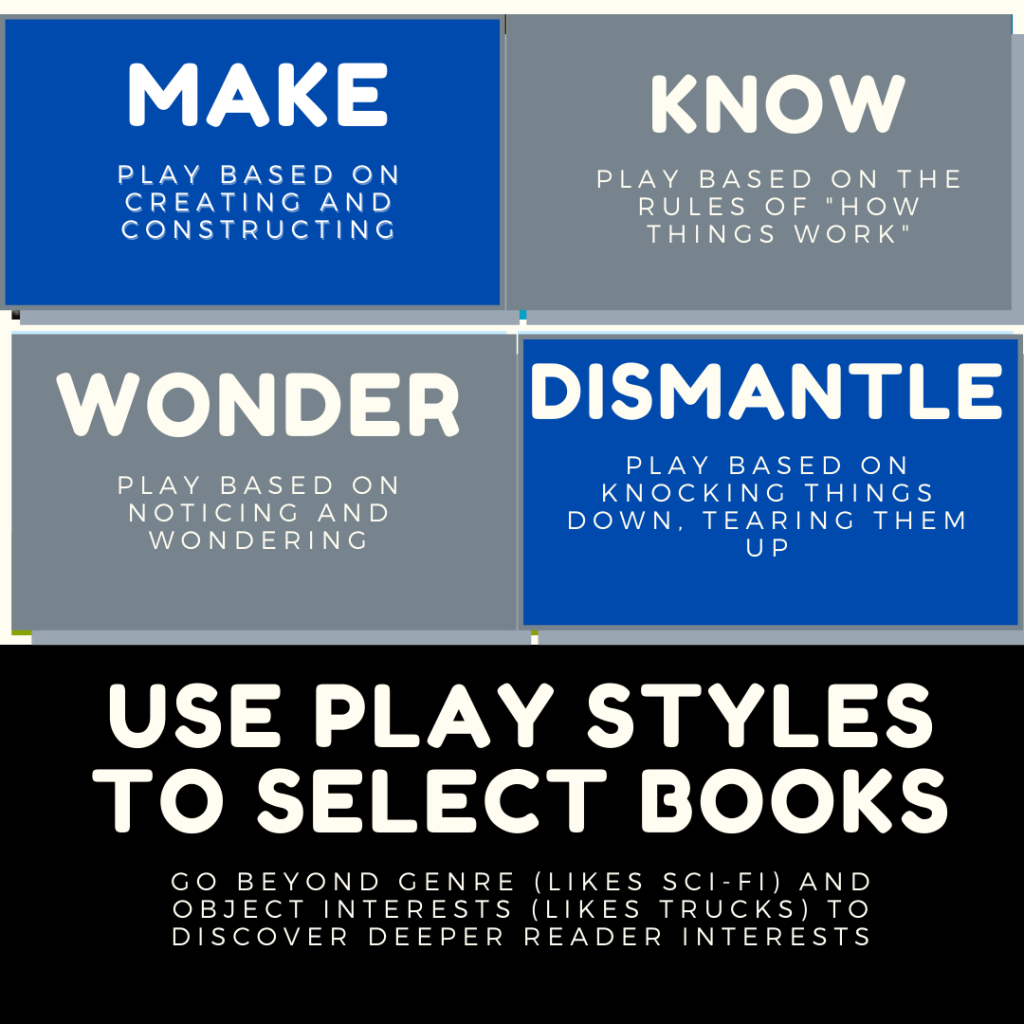
Although this activity is geared towards children and play, when I created this, I also had older kids and adults in mind. If you have a problem you might read the owners manual or research online (to know how things are supposed to work), you might build something to help you visualize the issue (make), you might brainstorm about some off-the-wall alternatives (wonder), or you might take apart whatever is broken to understand how it works (dismantle).
For each of these categories, I put together a super-mini-collection of four children’s books to illustrate the concept of matching play style to books. I created these collections using my personal knowledge of their plots.
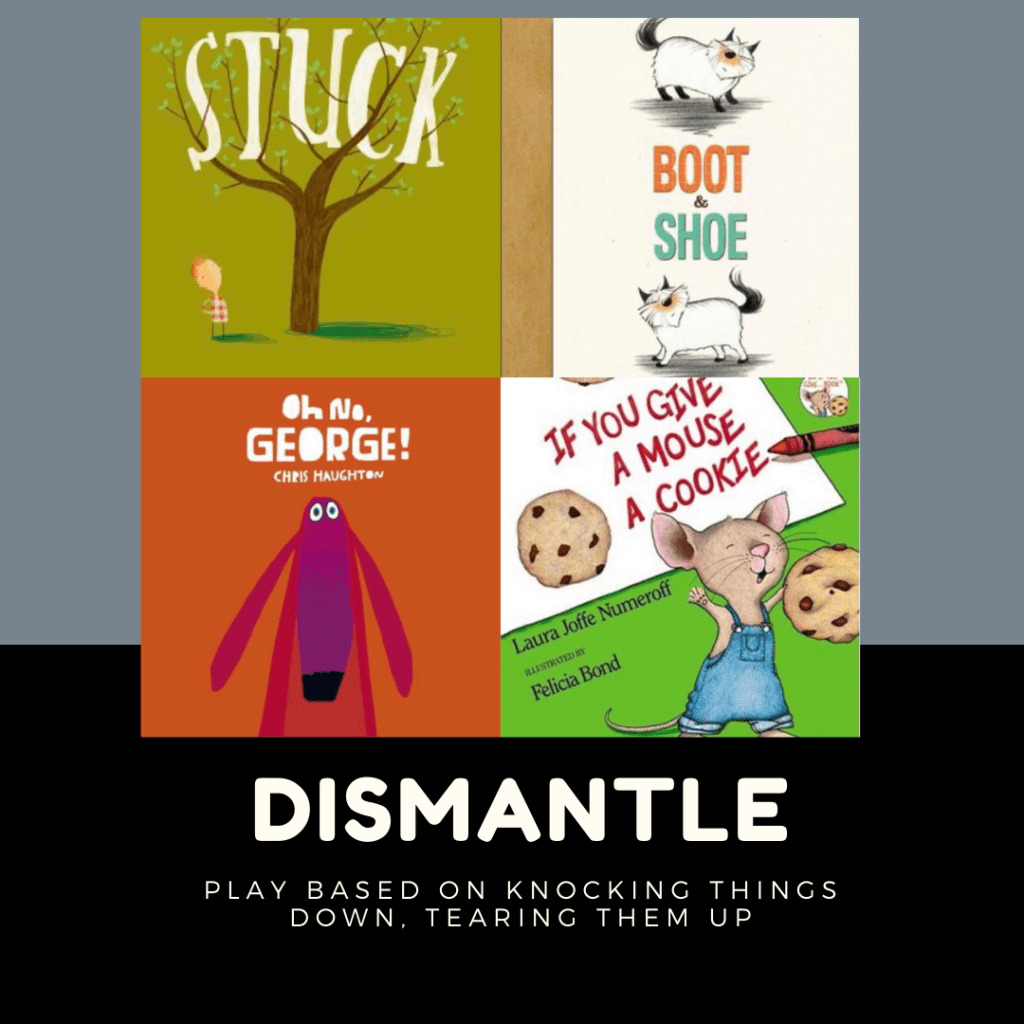
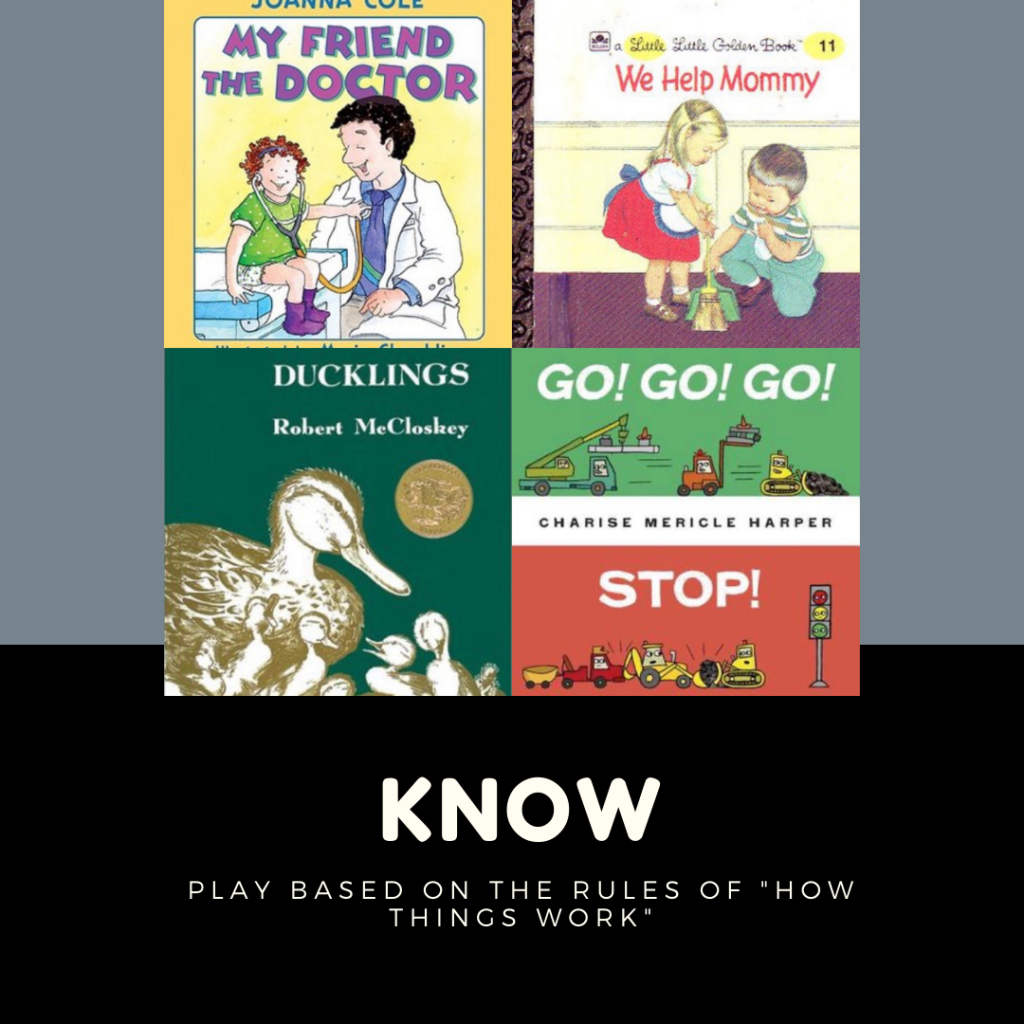
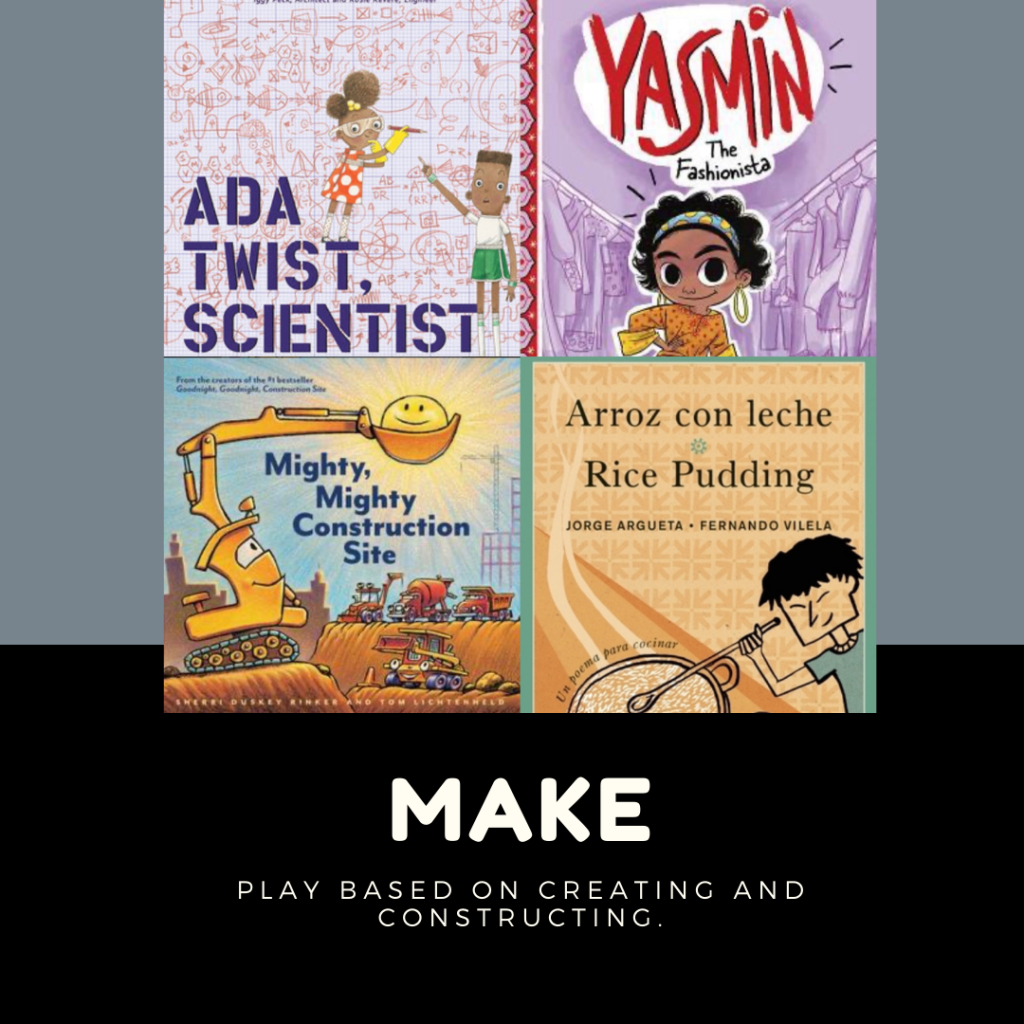
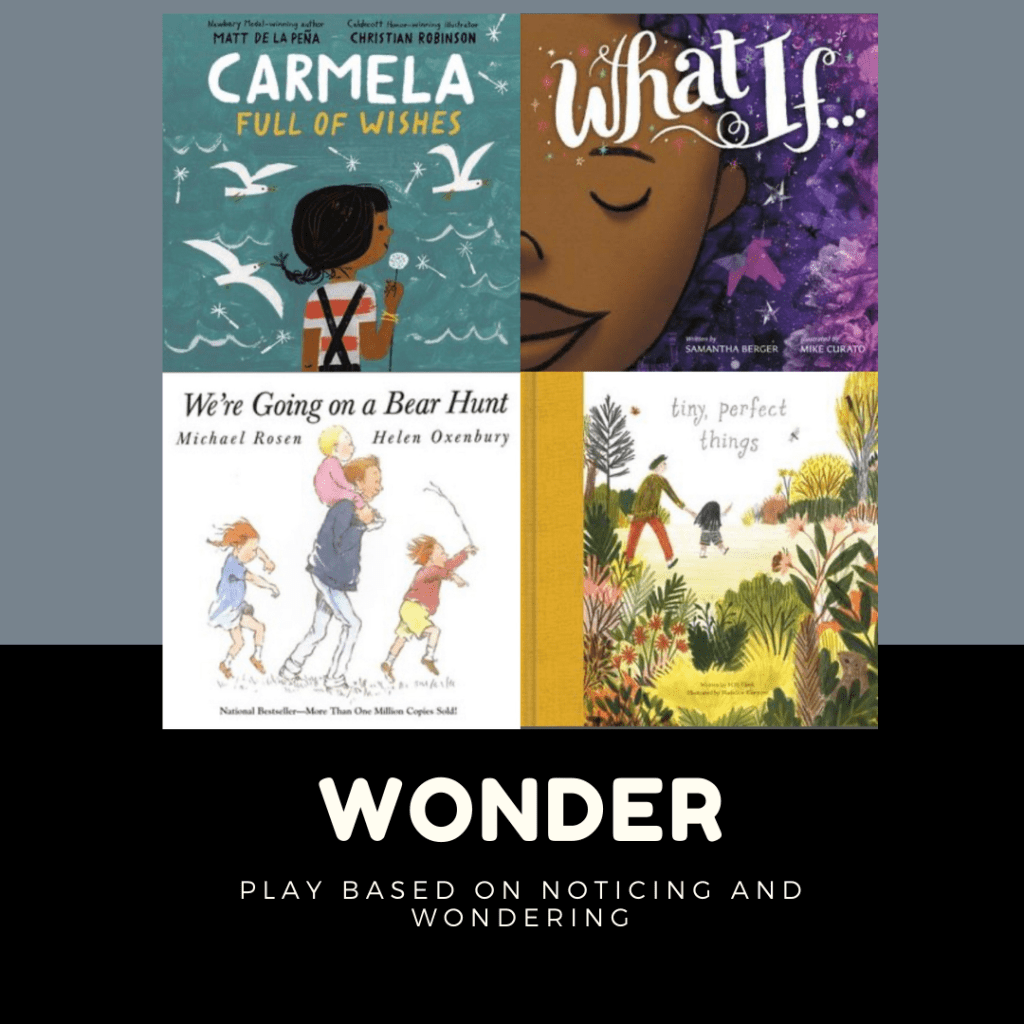
If you do not know very many books that fit these categories or want to discover more, use subject searching on WorldCat. To do think you are going to need to:
- Make a list of words and related concepts. Example: when I was searching for “Know” books, I thought of rules, laws, how things work, physics. If you’re searching for children’s books, append the term Juvenile literature to your search so it will look like this “su:Physics Juvenile literature.” (su: tells WorldCat to search the subject field).
- Select a book or two from the results that seems to fit. Take a look at the subjects applied to that book through using “view all subjects.” You can select a linked subject to get another list of results.
Here are four subject searches linked to each category to get you started:
Make: su:cooking Juvenile literature.
Know: su:Machinery Miscellanea Juvenile literature.
Wonder: su:imagination Juvenile literature.
Dismantle: su:Humorous stories juvenile fiction.
Remember: We probably use all of these strategies at play and at work AND we also want to build collections that both affirm our experiences and broaden them, so there should be a balance between representing each these categories in your library.
What do you think of the Make, Know, Wonder, Dismantle matrix? Does it help you think about what would appeal to readers in your household?
*Throughout this series I will use the term “readers” because I prefer it over “users” (which I find to be a bit clinical!). However, this series will apply to people who are collecting materials other than print books and to people who cannot or do not read print books. I welcome feedback on a potential terms that are more inclusive than “reader,” less clinical than “user,” and applicable in a household.
 Rachel Vogus' Habits and Hobbies